
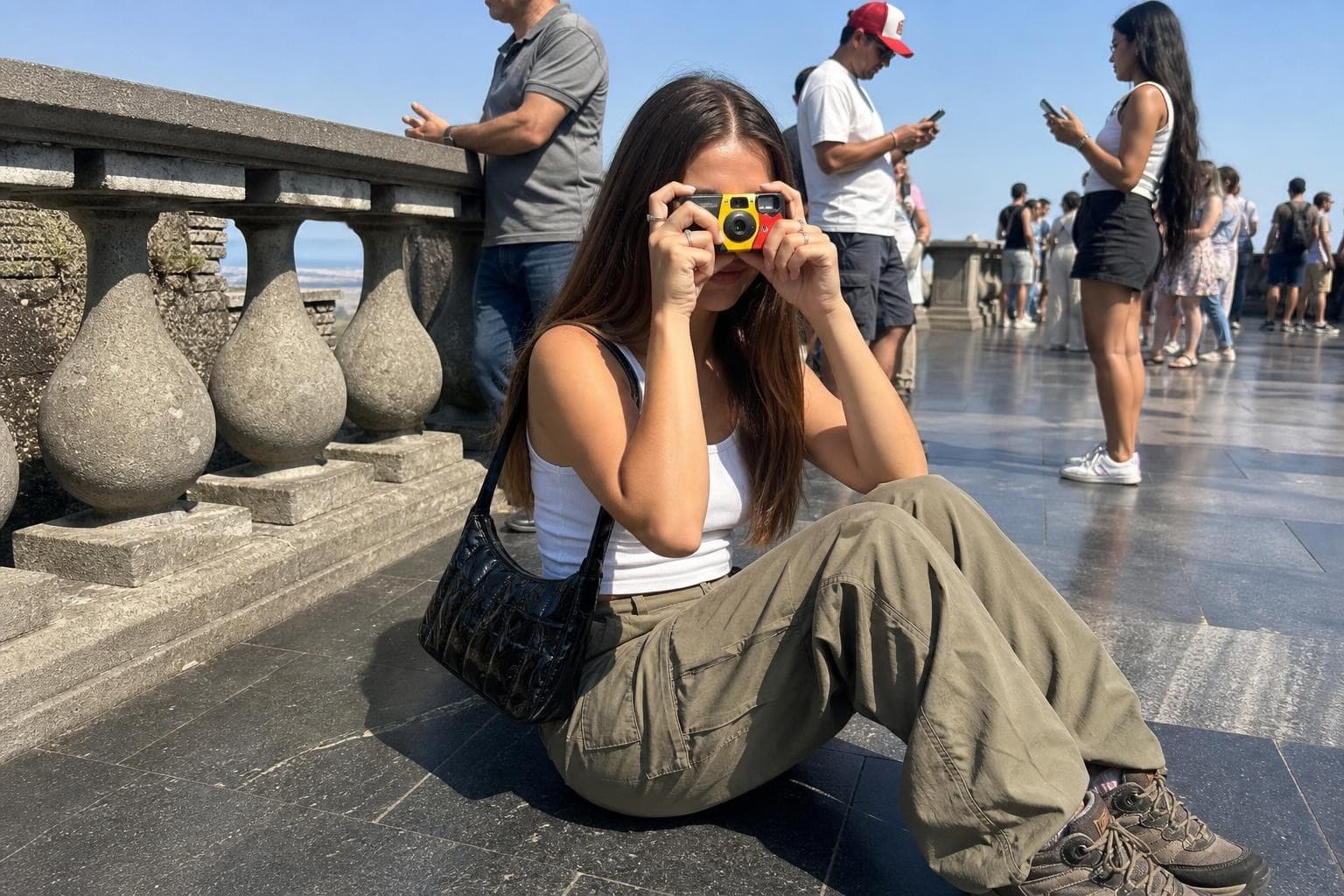
AI photos look fake on a feed for two reasons: skin rendered too smooth and poreless, and a polished, cinematic look that reads as staged next to ordinary phone photos. The skin tell is well known. The cinematic one does most of the damage and gets noticed least, and matching the look of a real smartphone snapshot is what fixes it.
Open your camera roll and find a photo a friend took of you last week. Not a flattering one. The one where the window behind your shoulder is blown out white, your hand is half a blur reaching for something off-frame, and the top of your head is clipped by the edge of the picture. Then open the best AI photo you have ever generated of a person. Centered. Lit from what looks like three directions at once. Skin clean, background dissolved into soft blur, the whole thing balanced like it was framed for a wall.
One of those looks like a Tuesday. The other looks like a campaign. On a social feed, the campaign is the one that gives itself away.
Of those two tells, skin gets all the attention. The cinematic one gets noticed less and matters just as much: the photo is too well made. The word people reach for is cinematic, and they are right. This post is about that second tell, and what realistic AI photos on a feed actually look like instead.
What makes a photo read as AI-generated at a glance?
Put a row of photos in front of someone and they can flag the synthetic one in under a second, usually without being able to say why. Two fingerprints drive most of that snap judgment.
Plastic skin is the obvious one, and it has been picked apart everywhere. The cinematic look is the quieter one. The subject is centered. The light is soft and seems to come from everywhere. The depth of field is shallow, the background blurred to almost nothing. The colors lean warm, or split toward teal and orange. Nothing is out of place, because the model has learned that nothing should be. That learned perfection is the problem.
The face itself is less and less the giveaway. In one study, people told AI-generated faces apart from real ones with 48.2% accuracy, worse than a coin toss (Nightingale and Farid, PNAS, 2022). By 2025, a newer study showed consumers achieving 52% accuracy on AI images and 49% on real ones, still at chance levels, while the cinematic polish compounded the tell, making detection even harder (Conjointly, 2025). What exposes a photo on a feed is rarely the face now. It is the cinematic packaging around it.
Why do most AI tools default to a cinematic look?
The short version: the training data is skewed toward professional photography. Stock libraries, editorial shoots, polished portfolios, wedding galleries, the images that get captioned and licensed and ranked. In that world a good photo is a controlled photo, so the model absorbs an equation. Good equals polished. Lit, composed, graded.
Casual phone snapshots are under-represented in that distribution. The billions of slightly crooked, slightly overexposed photos sitting in people's camera rolls mostly never make it into a curated dataset. So when a model reaches for what a photo of a person should look like, it reaches for the film set, not the kitchen counter. A realistic feed photo is the rarer reference, and rarity in the data shows up as rarity in the output.
What does a real smartphone photo actually look like?
Before going further, it helps to fix the reference. Almost all photography now is phone photography: roughly 92.5% of the more than 2 trillion photos taken in a recent year came from smartphones (Photutorial). That is the look the eye is calibrated to. Here is roughly what a phone camera produces when a friend grabs a quick shot:
- Top light, often from a window or a ceiling, often unflattering.
- Mild lens distortion at the edges of the frame.
- Motion blur on a hand, a strand of hair, the edge of a sleeve.
- Slight overexposure where a bright surface catches the sensor.
- Imperfect framing, the subject off-center or the head clipped.
- A background that stays mostly in focus, because phone optics are not a full-frame lens.
- Compression artifacts the eye has learned to read as real.
None of those are flaws to a viewer scrolling a feed. They are the signature of a real moment. Strip them out and the photo loses the thing that made it believable.
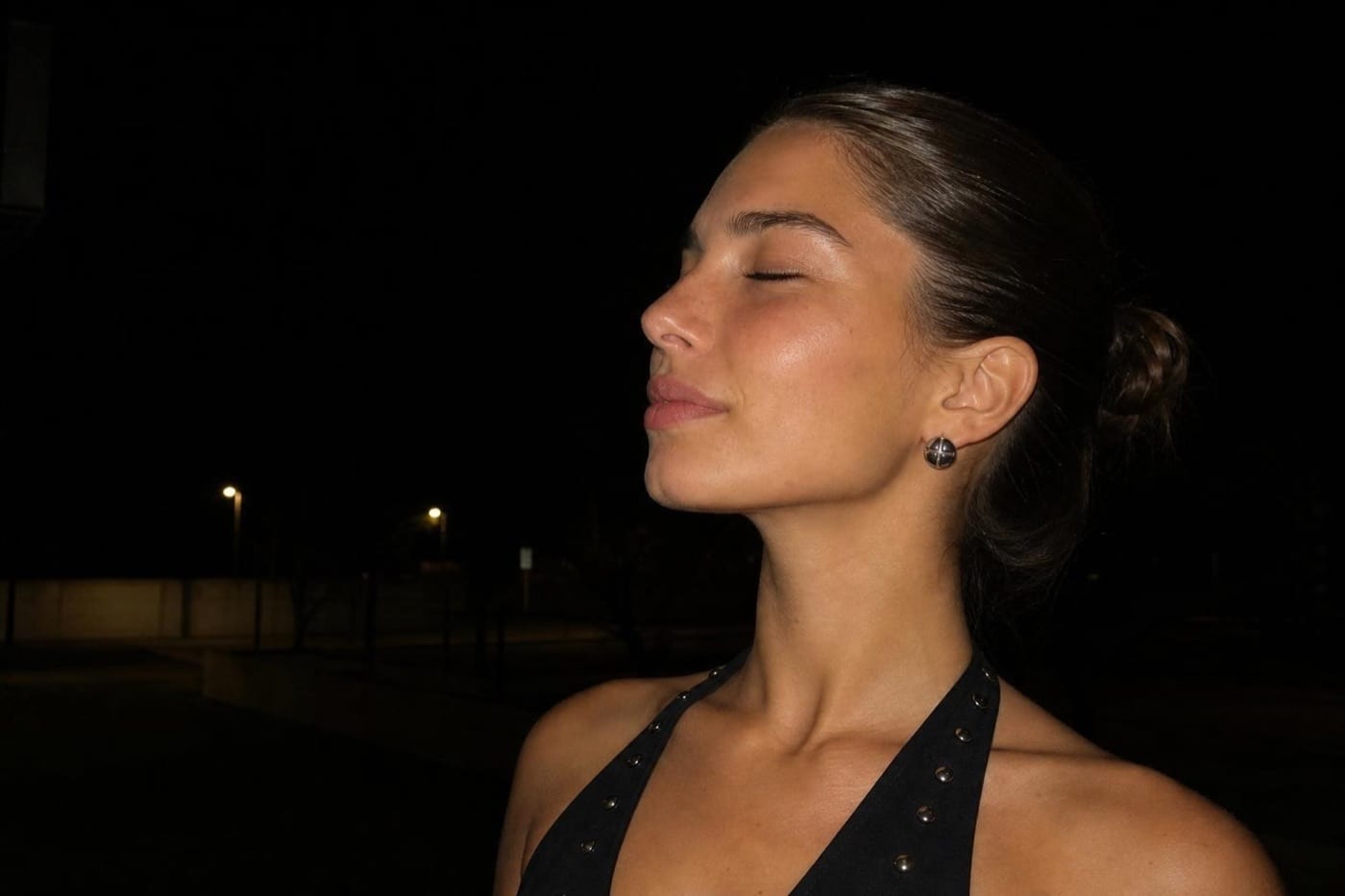
Why does polish hurt authenticity on a feed?
A social feed is a stream of imperfect moments. That is the baseline the eye calibrates to as it scrolls. A flawless frame does not blend into that stream. It interrupts it. And the brain has a ready category for an image that looks more produced than everything around it: an ad, a staged post, or something synthetic.
This is the reframe worth holding onto. The axis that matters on a feed is not image quality. It is whether the photo reads as a real moment. A technically worse photo, grainier and more crooked, can win on that axis against a technically flawless one. Context decides the meaning. In a gallery, polish reads as craft. In a feed, the same polish reads as a tell.
The question a feed photo has to pass is not "is this a good photo". It is "could this have happened on a Tuesday". Those are different tests, and they reward opposite things.
Can you prompt your way out of the cinematic default?
The common workaround is to bolt instructions onto the prompt. Candid. Unposed. iPhone photo. Natural lighting. Sometimes it works. A render comes back looking like a real snapshot and the trick feels solved.
Then the next render drifts back to the film set. The phrase pushes against the training bias, but it does not erase it, so the output wobbles between candid and cinematic across a batch. You end up curating: generate ten, keep the two that landed, discard the rest. That is workable for one photo and draining for anyone who needs a steady stream of them for an active AI influencer account. The look is a default baked into the model, and a few words in a prompt are a weak lever against a default.
What separates a candid shot from a staged AI render?
Picture the same character in the same outfit, photographed twice. One frame is the cinematic render. One is a candid. Walk the differences.
Light. The cinematic frame is lit from several soft sources with no clear origin. The candid has one hard direction, a window or the sun, and shadows that fall where they fall.
Framing. The cinematic subject sits dead center, sized to fit. The candid is off-balance, maybe leaning out of frame, maybe with empty space in the wrong place.
Depth. The cinematic background is blurred until the room behind the subject is gone. The candid keeps that room mostly readable, because the lens was never going to blur it that hard.
Motion. The cinematic figure is frozen and composed. The candid caught a half-step, a turning head, a hand still moving.
Same person, same clothes. One looks arranged. One looks caught. The second is the one a feed believes.


How does Cladegrove produce social-feed photo realism?
Cladegrove renders characters in the visual language of a phone candid rather than a film set. The output carries top light instead of even studio fill, framing that sits slightly off rather than dead center, and the sensor texture a feed expects from a real photo.
The result is a photo that reads as a moment, not a campaign: the same consistent character held steady across every render, looking the way a feed expects a real photo to look. If you want to understand the mechanism behind that consistency, how Cladegrove locks a character's face covers the full architecture. The same candid discipline applies across a full pose and outfit set: keeping a character consistent through different poses walks through how the identity is held while every other variable in the frame changes. For brands using a consistent AI model across a product catalog, the same principle applies on the listing page: the AI model for clothing brands guide covers how realism and identity lock work together for catalog photography.
See how it works for creators building presence on social feeds, or for running multiple personas at once.
The cinematic tell is the failure mode I have watched longest. Across a year of building Cladegrove and looking at character renders every day, the same pattern kept surfacing: the photos people rejected were rarely the ugly ones. They were the too-perfect ones. A lot of the realism work, a year of pulling apart what a phone photo actually contains and teaching the output to land there, started from that one observation. The skin gets the headlines. The cinematic look is the tell that taught me the most.
Fabio Ariotti, operator
Common questions
Why do AI photos look fake?
Two tells do most of the work. The first is plastic skin. The second is the cinematic look: even studio lighting, shallow depth of field, a centered subject, a graded color palette. A casual feed is full of imperfect phone photos, so a flawless, perfectly composed frame reads as staged rather than real.
How do you make AI photos look real on a social feed?
Match the look of a phone camera, not a film camera. That means top lighting that is sometimes unflattering, slight overexposure on bright surfaces, imperfect framing, mild lens distortion at the edges, and sensor texture. Realism on a feed comes from those small flaws, not from more polish.
Does adding "candid, iPhone photo" to a prompt fix the cinematic look?
It helps unevenly. The phrase nudges the model toward a snapshot, but the training bias toward polished photography keeps pulling it back. Some renders land candid and many drift back to a cinematic frame, which is why the result is inconsistent across a batch.
Is cinematic AI photography bad?
No. It is wrong for one use case. For a poster, a film still, or an editorial cover, the cinematic look is the right choice. For a social feed that should read as a real moment, the same polish works against the photo and marks it as content rather than life.