
An AI content creator
with your own face.
An AI content creator makes a full feed of photorealistic posts from a single locked identity, no studio, no shoot. You are the creator, and your audience follows you, not a stock model. But you cannot fly to Tokyo every Tuesday, rent a studio every Friday, or shoot a snow scene in July. Upload one photo of yourself: Cladegrove locks your real face and places you in every scene you cannot physically reach, with the same you on every shot.
Real photos can only go so far.
Your face shouldn't.
A camera captures what is in front of it. The room you are in. The light you have today. The flight you can afford. The outfit already in your closet. Most of the content you wish you could post lives outside that box: a different city, a different season, a budget you do not have.
Cladegrove starts from one photo of you. It saves your face as a locked reference and reuses it on every render that follows. Same jaw, same eyes, same skin. Different scene, different outfit, different light. The consistency is the point: nobody else can keep your real face stable across a year of posts.
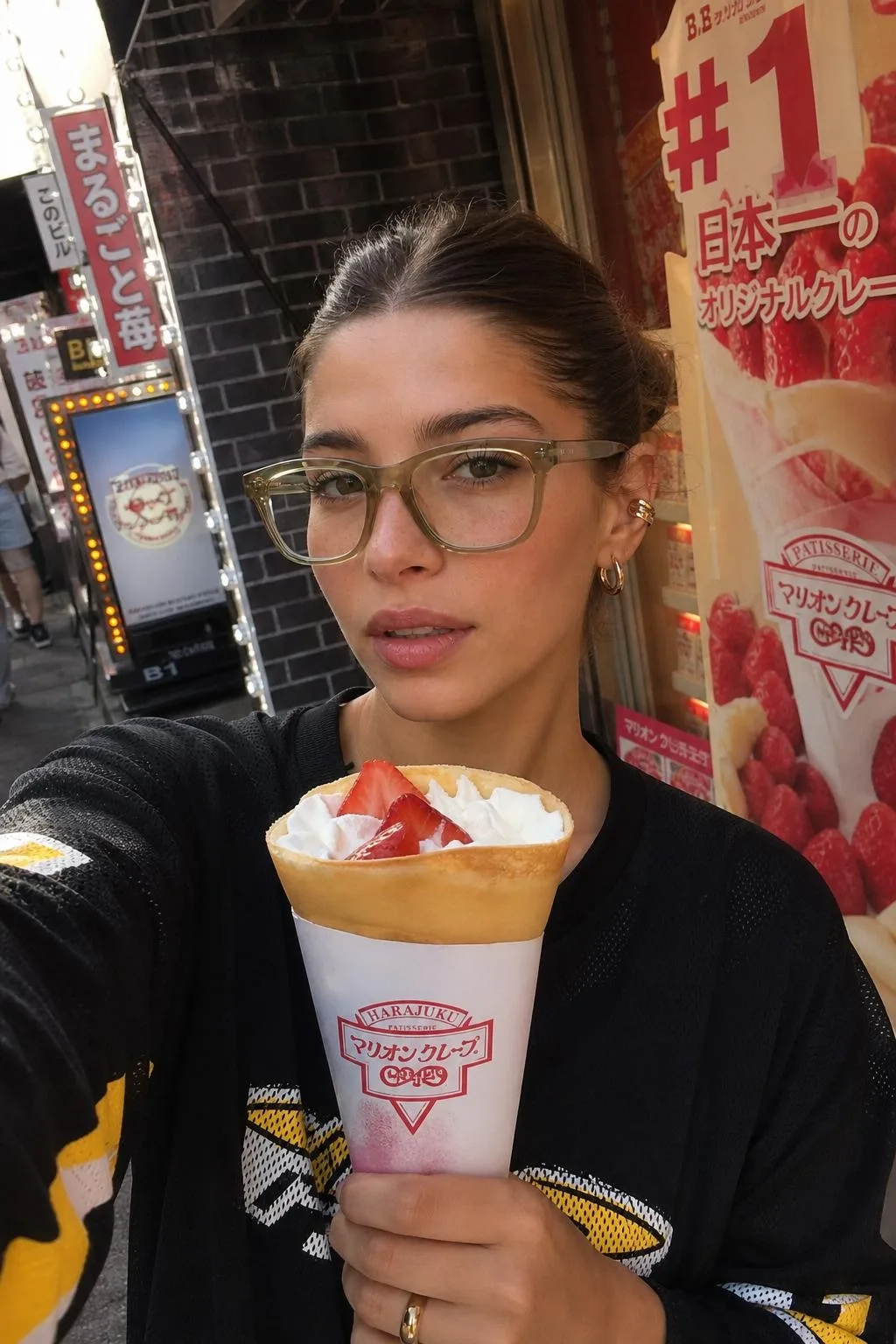
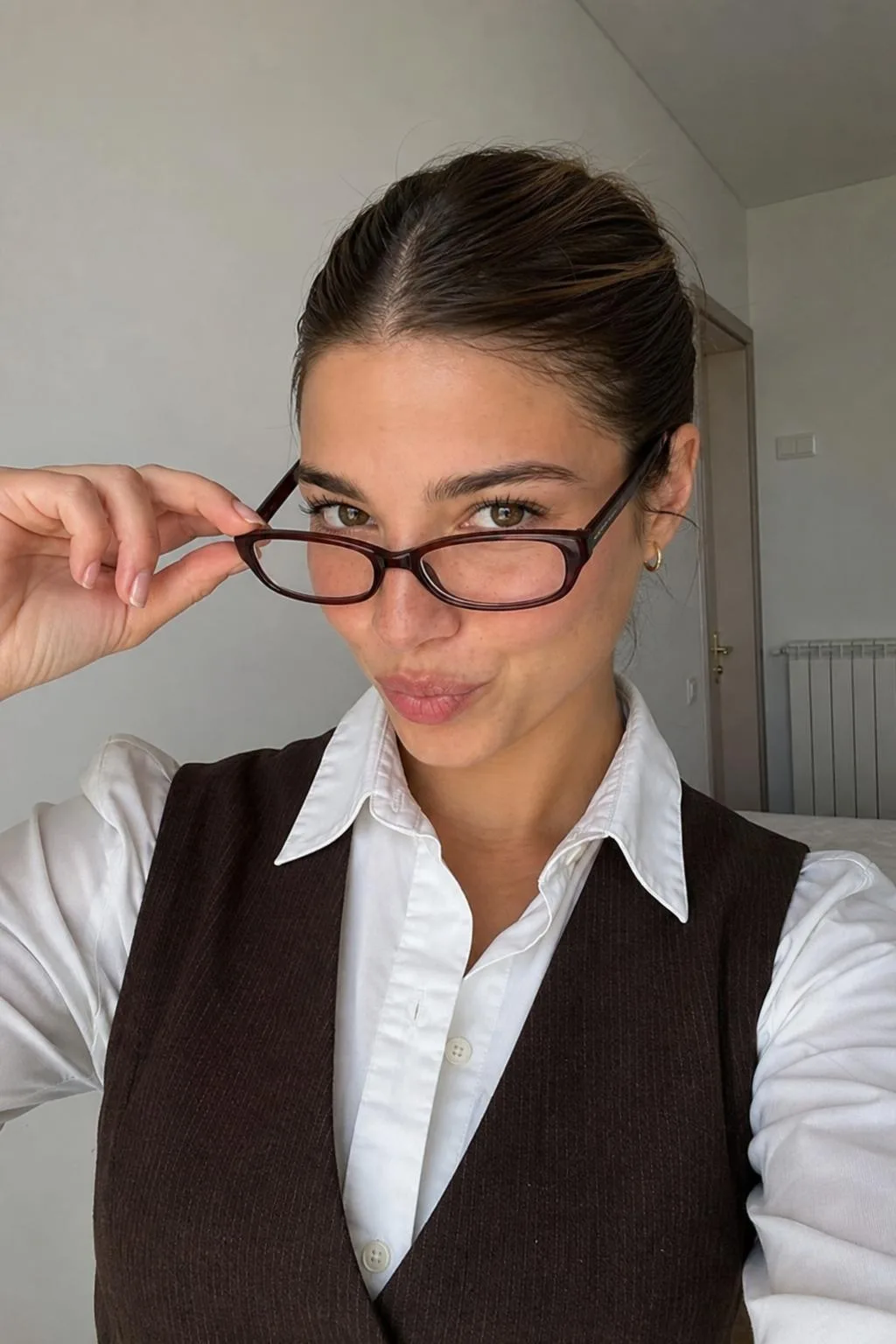
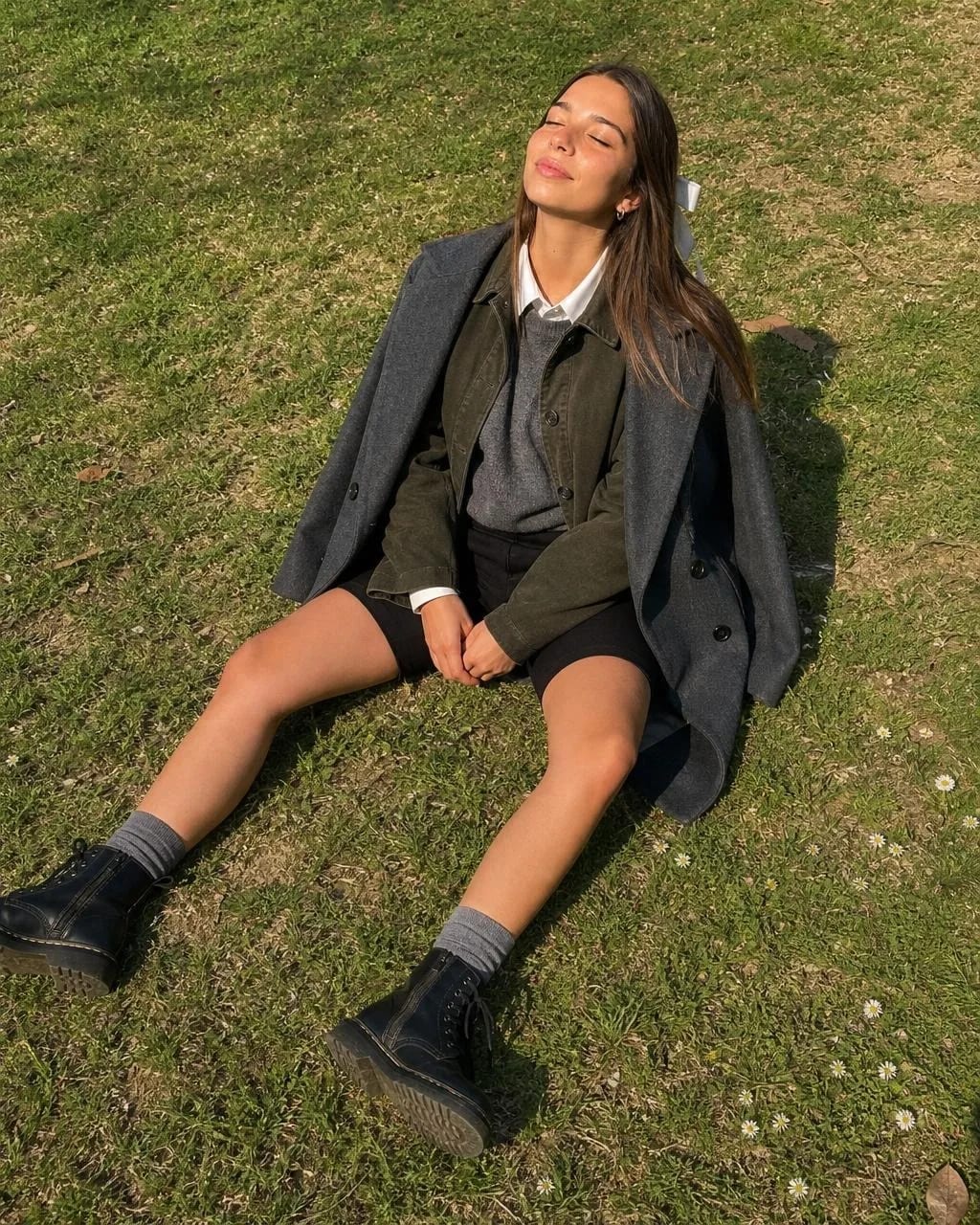
Three steps from your photo to a week of content.
Upload, dress, place. The whole pipeline runs on one photo and a saved wardrobe, so you go from setup to your first scene in an afternoon, not a week of shooting.
Upload your face.
Pick the photo upload mode in the wizard, drop in a clear photo of yourself, accept the likeness consent. Cladegrove reads the image, locks your facial geometry as the reference, and renders a clean studio shot under controlled light. From this point, every render uses your real face as ground truth, not a re-roll.
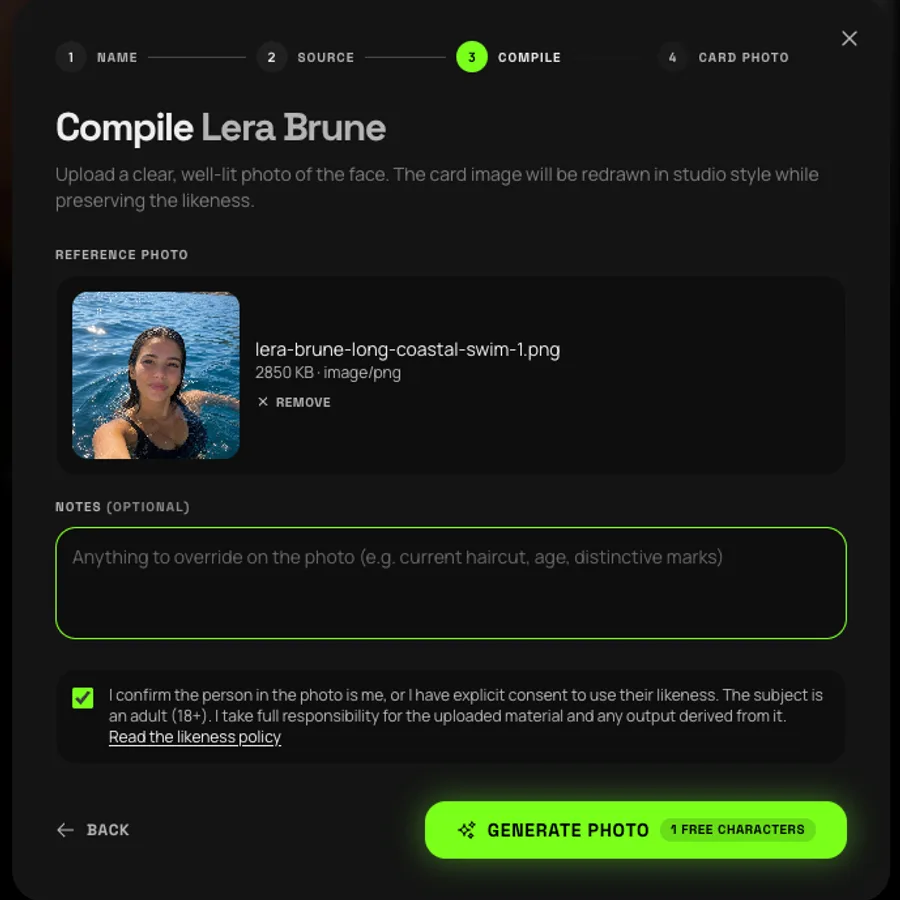
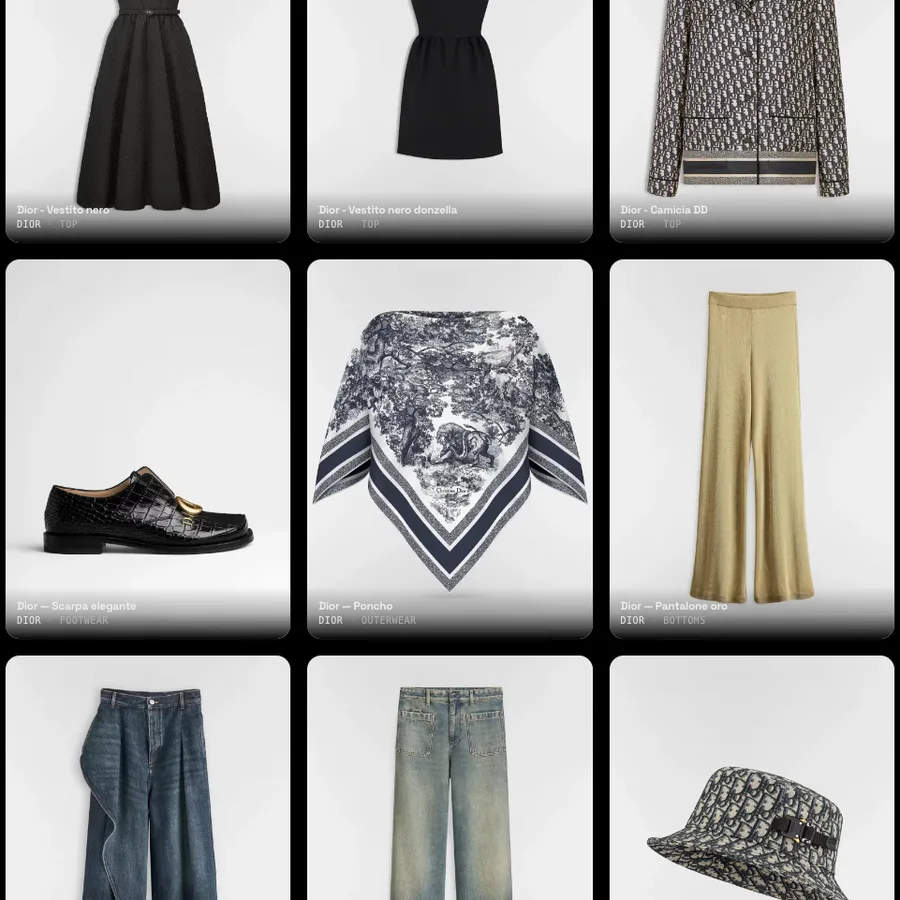
Build your wardrobe.
A digital mannequin with thirteen slots, from headwear to footwear. Add your real outfits and the looks you wish you owned. Save each one as a preset, then apply the whole outfit in one click. Your aesthetic stays consistent across every post, the same way a real wardrobe would.
Place yourself anywhere.
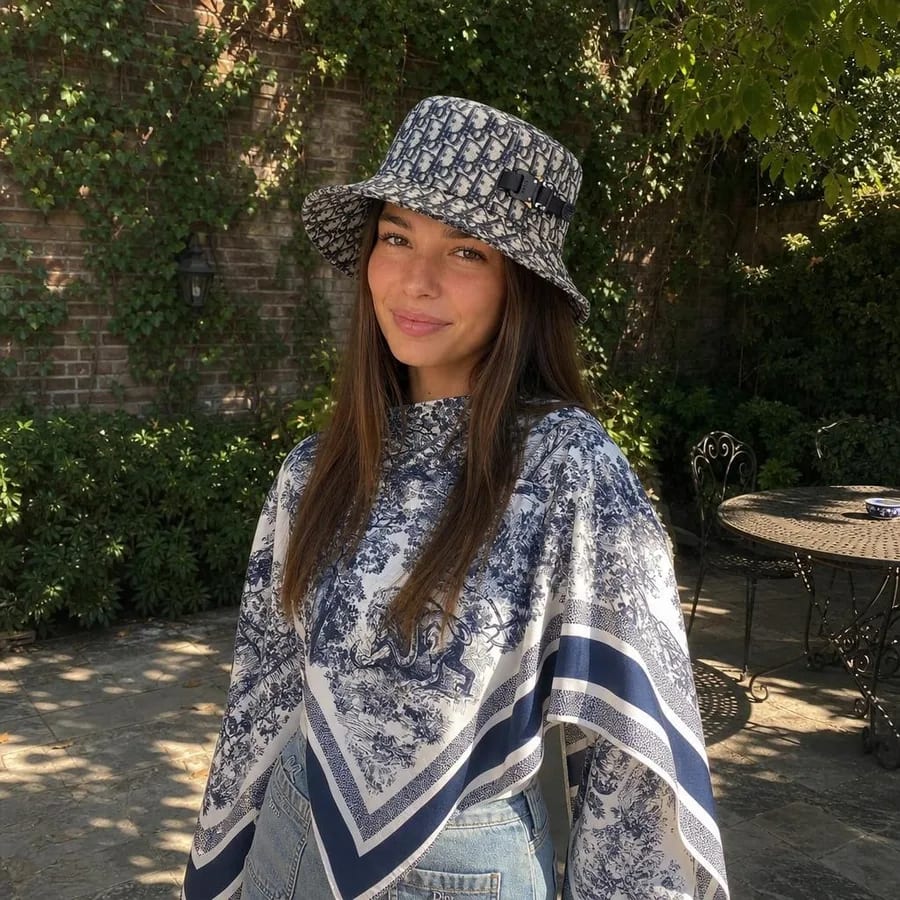
Tag yourself, tag a saved outfit, write the scene in plain English. The render comes back in 30 to 90 seconds with your real face on it. Cities you have not flown to. Seasons that are months away. Studios you cannot rent.
How it works
Most of the time and money in AI photo work goes into rewriting prompts, not into pictures.
Four steps, then the prompts stop coming back.
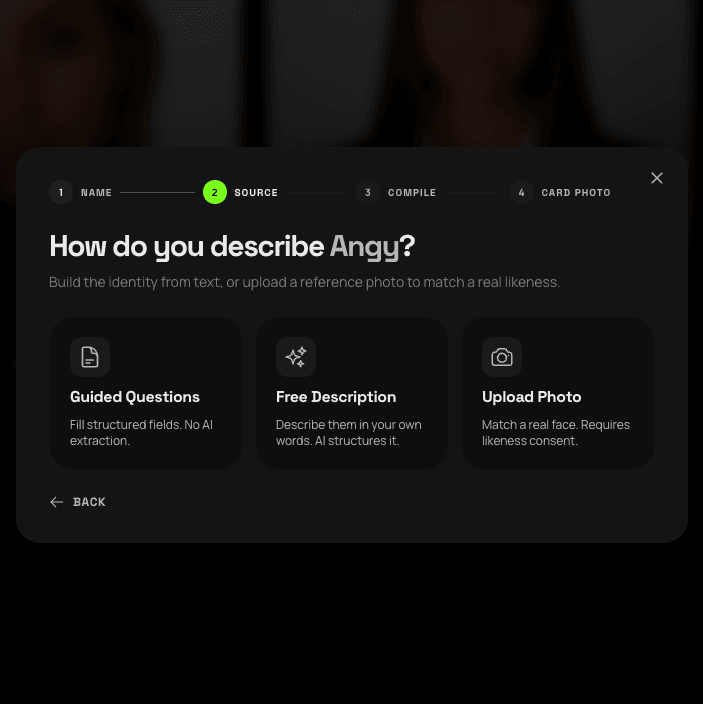
Build the character
A face described once, saved as a record. The starting point becomes a person on file, not a three-paragraph description rewritten at the top of every new prompt.
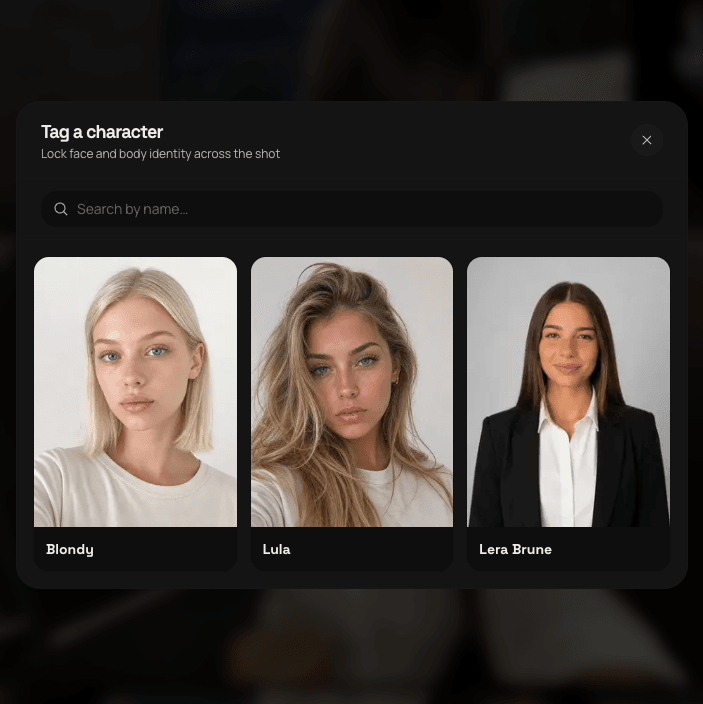
Tag, don’t describe
The character drops into the composer as a tag, not as text. The recurring block that used to define face, hair, build and skin is replaced by a single reference.
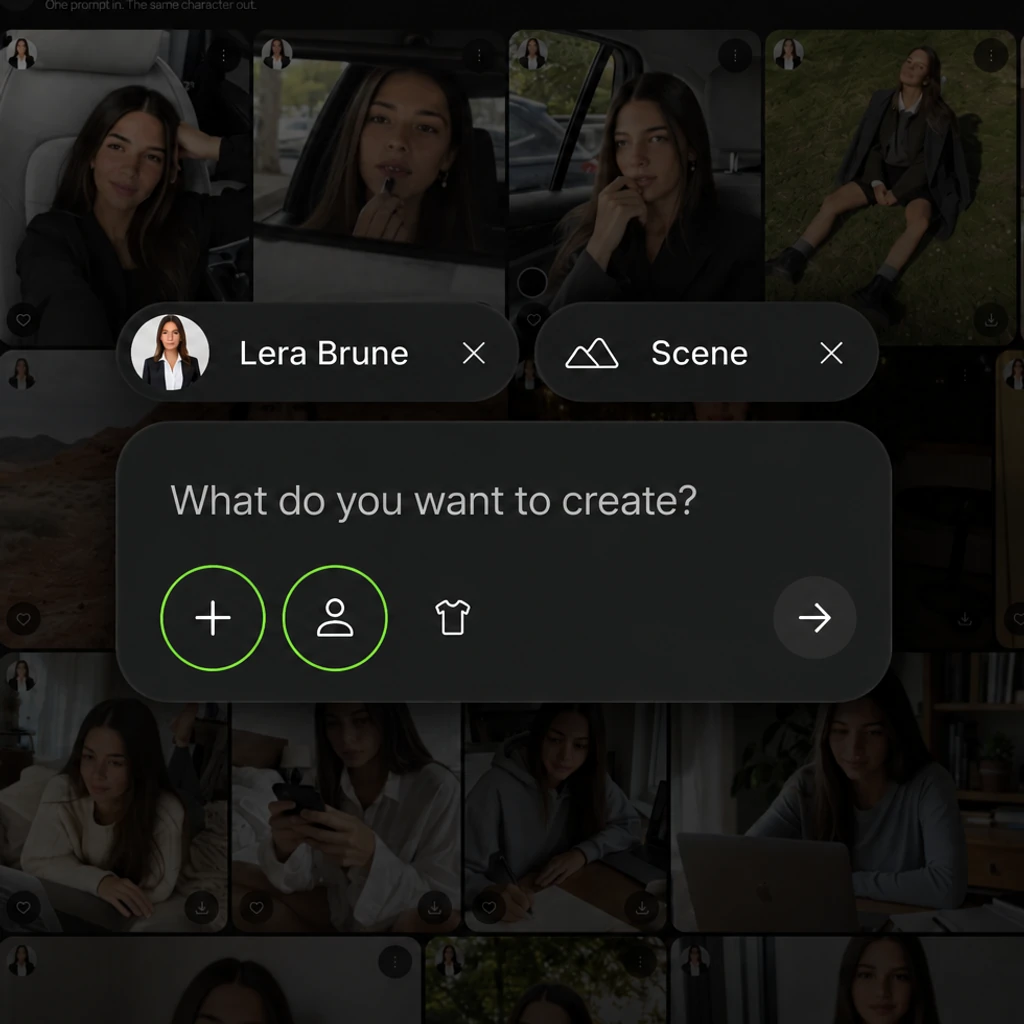
Tag the character, drop the scene
Set the scene two ways: a short prompt with where, mood and what is happening, or just a reference photo. All you need to think about is the scene.
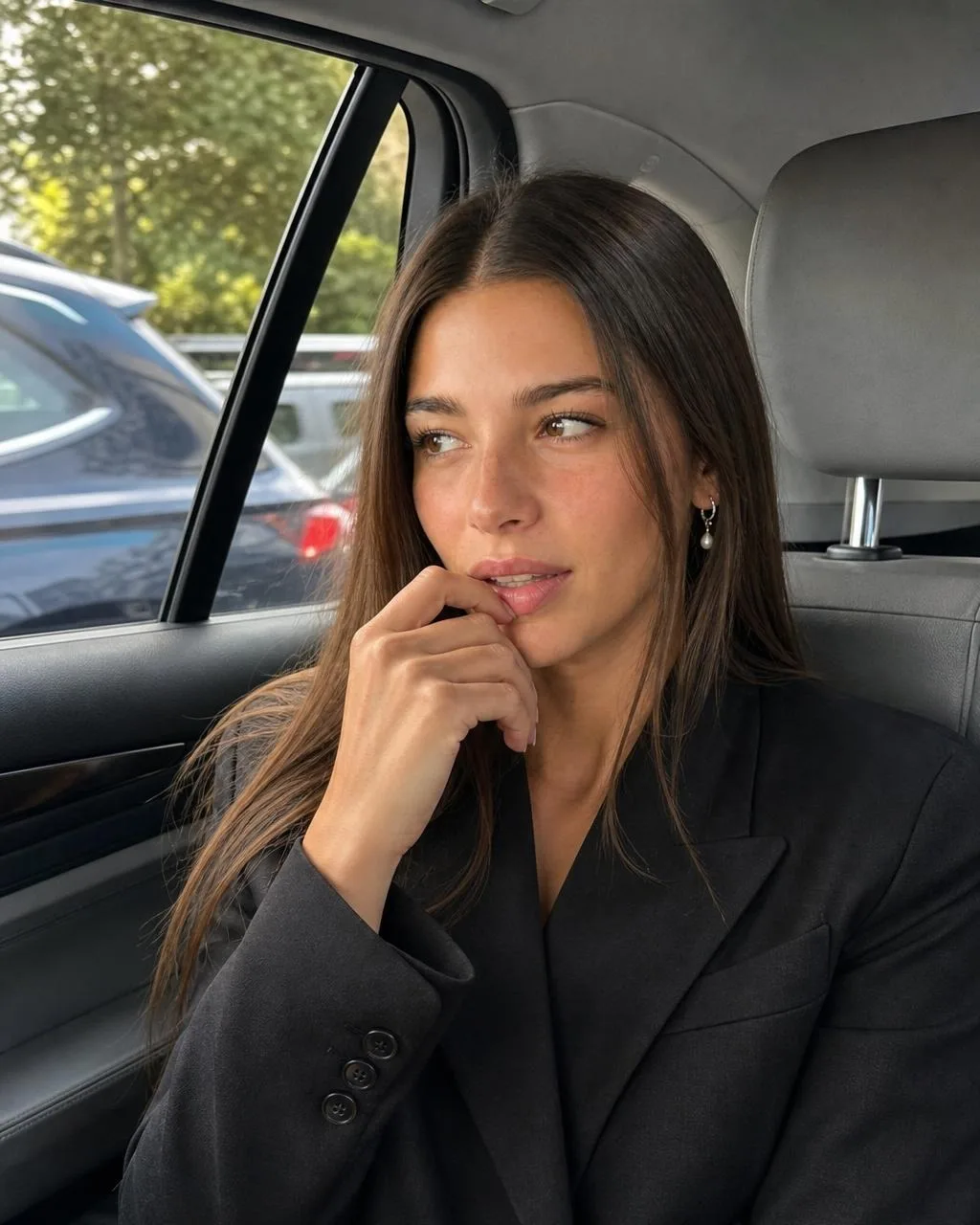
Generate
One click, one photo. The next photo of the same person costs another credit, not another forty minutes of prompt engineering and three discarded variants.
Every other AI photo
has the same tell.
Waxy skin. Glossy highlights that never sit where they should. Pores stamped on like a sticker, freckles airbrushed in a perfect grid, every micro-detail at the exact same intensity. Zoom in once and the photo collapses. The face stops being a face and starts looking like a render.
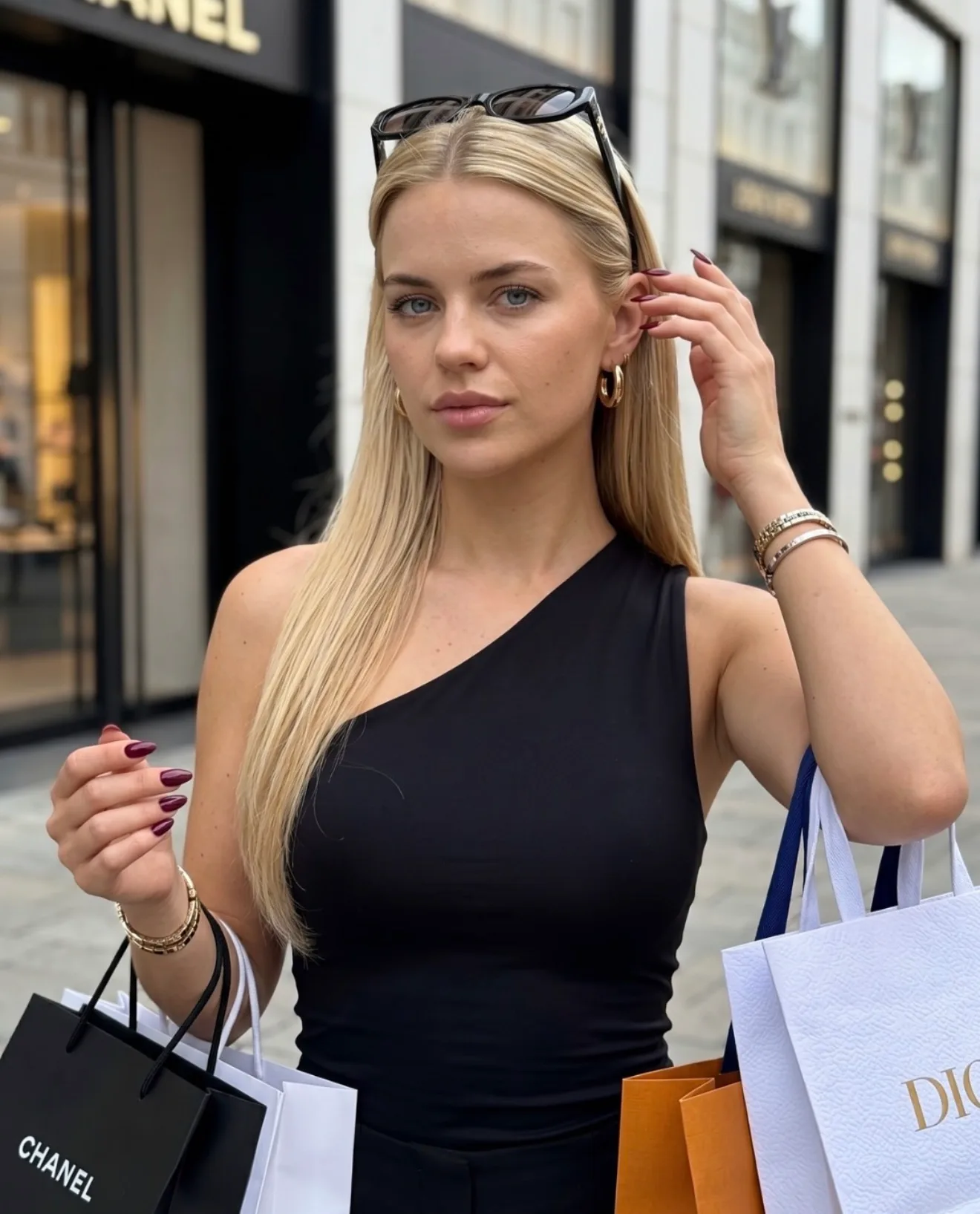
- Waxy, glossy skin
- Painted eyebrows, gridded freckles
- Pores stamped at the same depth
- Flat, plastic-looking light
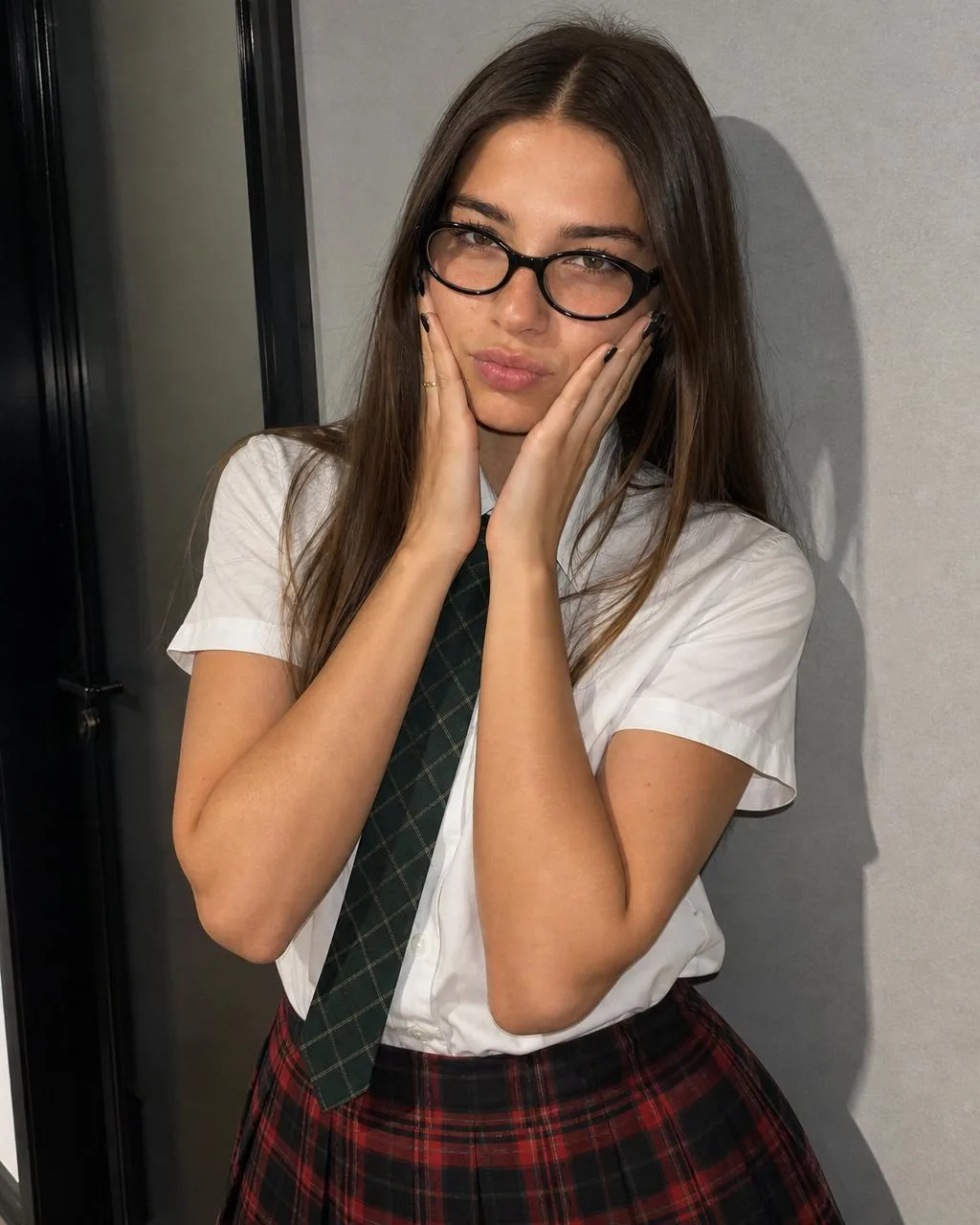
- Real skin, not a polished surface
- Grain and pores where they belong
- Light that falls like real light
- Depth you can read at full zoom
Detail is the hard part.
Detail is not a slider pushed to a hundred. It is measured, layered, and dosed. Where the skin should stay still, it stays still. Where the light should sink into a pore or a fine line, it sinks. The result reads like a real photo of a real person, not a render trying to pass for one.
Skin is one tell. The other is the cinematic look: why AI photos look fake on a feed.
How Cladegrove holds consistency.
Other tools generate one good photo, then drift on the next one. Your jaw changes. Your eyes change. Your skin changes. After a month your feed reads like five different people. Cladegrove was built around the opposite goal: one identity, locked, reused.
What each post used to cost.
A shoot is a day and a budget. A Cladegrove photo is a sentence and a credit. Same feed, different math.
Questions a faceless creator usually has.
The same handful of questions come up before signup. The answers, in order.
Why do AI image tools generate a different face every time?+
How do you create an AI character that stays the same in every photo?+
How do I put my face in AI photos?+
Can I use an AI character instead of showing my own face?+
Is AI-generated content allowed on Instagram and TikTok?+
Do the photos look AI-generated?+
Are AI characters the same as deepfakes?+
Who owns the photos generated with Cladegrove?+
Do I need to disclose that the photos are AI-generated?+
More from Cladegrove.
A persona people follow.
Use the AI influencer generator to build a standalone persona: design it once and run it like a business across years of posts.
See AI influencers →For BrandsBrand ambassador.
Need AI UGC for a brand: one ambassador face across every campaign, channel, and market, with no shoot and no usage rights to track.
See for brands →Upload your photo. Post anywhere.
A free account is the full Cladegrove, not a stripped-down trial. The character editor, the wardrobe, InstaMood and Friends are unlocked from day one, with starter credits already in the pool so the first face runs end-to-end before any commitment. No feature gates, no demo mode, no expiring trial: upload the photo, lock the wardrobe, ship a real week of content at your pace, and upgrade only when the work justifies it.
No card required. Plans from €19.90/mo.