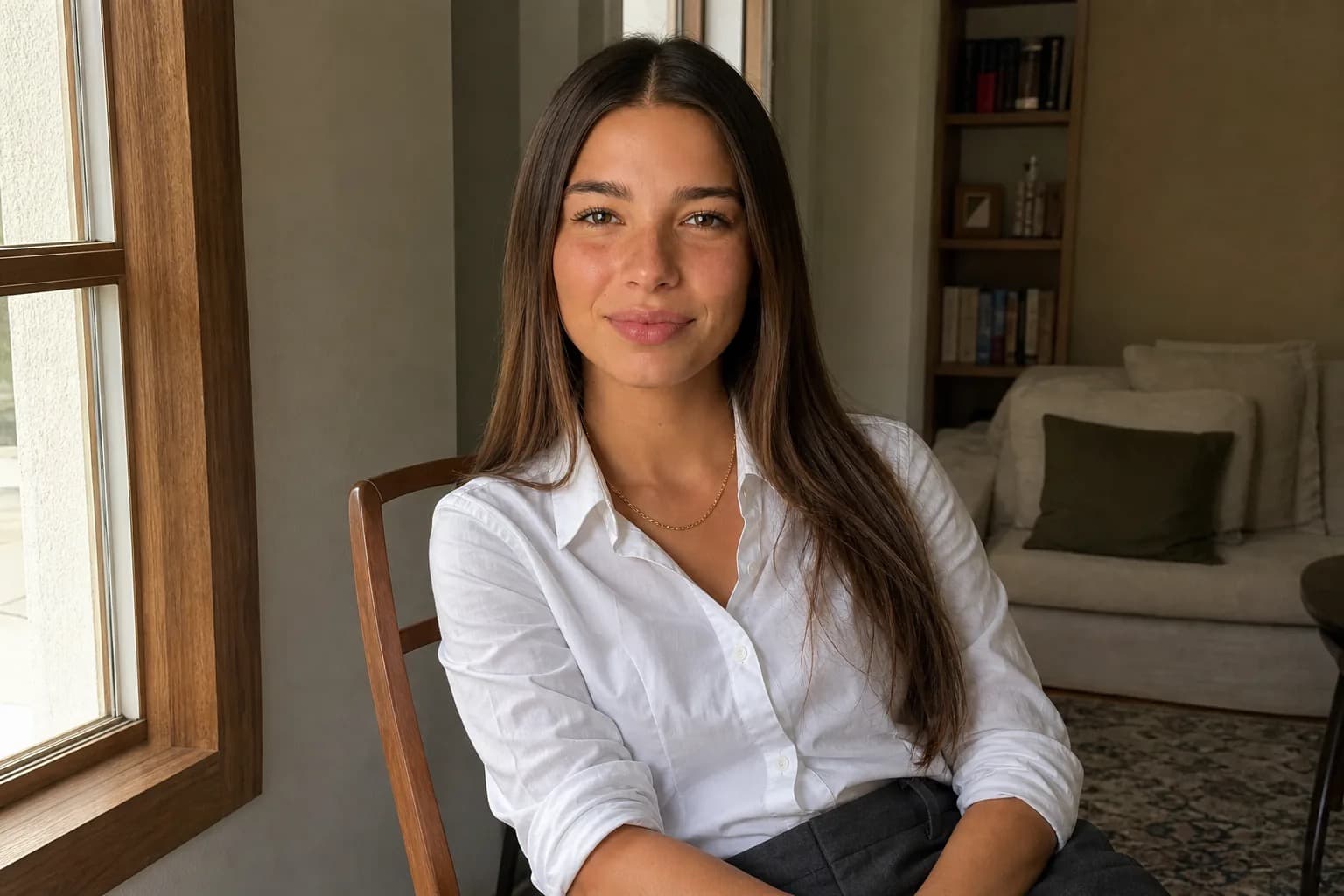
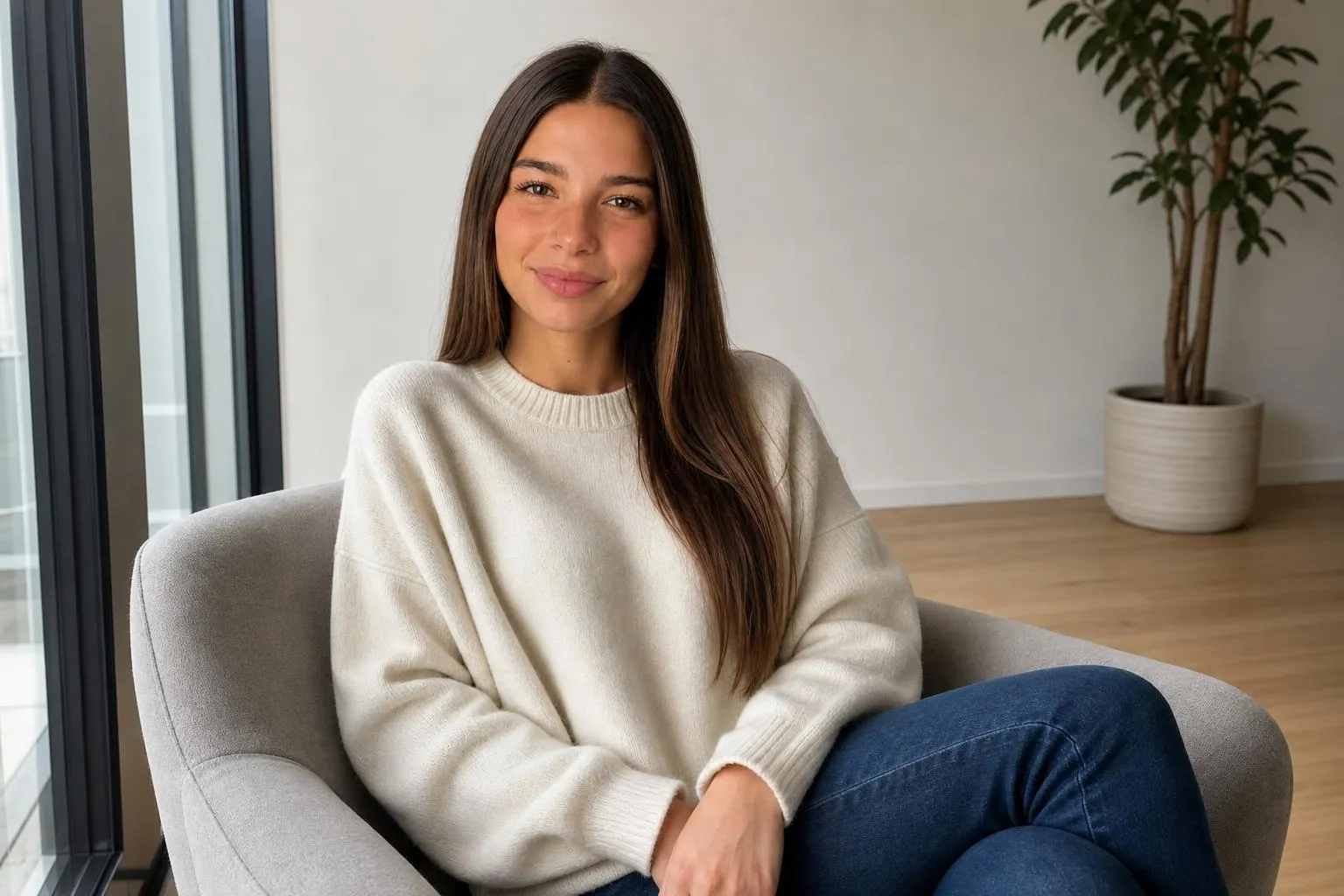
Keeping an AI character consistent comes down to one move: the identity is saved once, as a structured profile plus a single plain reference photo, and that reference is handed back to the model on every later generation. The scene, the outfit, and the light come from the prompt and change freely. The face is read from the saved reference, never re-invented, which is why a consistent character holds across a feed. The other half of that equation is how the photos themselves read as real, a separate problem covered in detail in why AI photos look fake on a feed.
People keep asking the same thing in different words: how does it stay the same person? On the third generation, the tenth, the fiftieth, across scenes that have nothing to do with each other. Here is the actual mechanism behind it: what gets locked, what gets thrown away, what survives, and why one image taken on day one carries most of the next year of generations.
What keeps an AI character consistent across generations?
The first thing Cladegrove writes to disk when a character is created isn't a render. It's a profile: name, mode, traits, a face description built from the text input. Cladegrove's consistent character platform works as an identity-persistence layer over a stateless image model, so the identity has to live outside the model, in a file. The face you eventually see comes from that file, not the other way around.
// character_07.json, abridged
{
  "id": "character_07",
  "mode": "text_guided",
  "anatomy": {
    "face_shape": "oval, soft jaw",
    "eyes": "hazel, almond, slight tilt",
    "skin": "warm, even, light freckling",
    "frame": "5'7\", lean, athletic",
    "hair": "dark brown, shoulder, soft wave"
  },
  "locked_at": "2026-04-19T11:42:00Z",
  "reference_render": "r_studio_001.jpg"
}
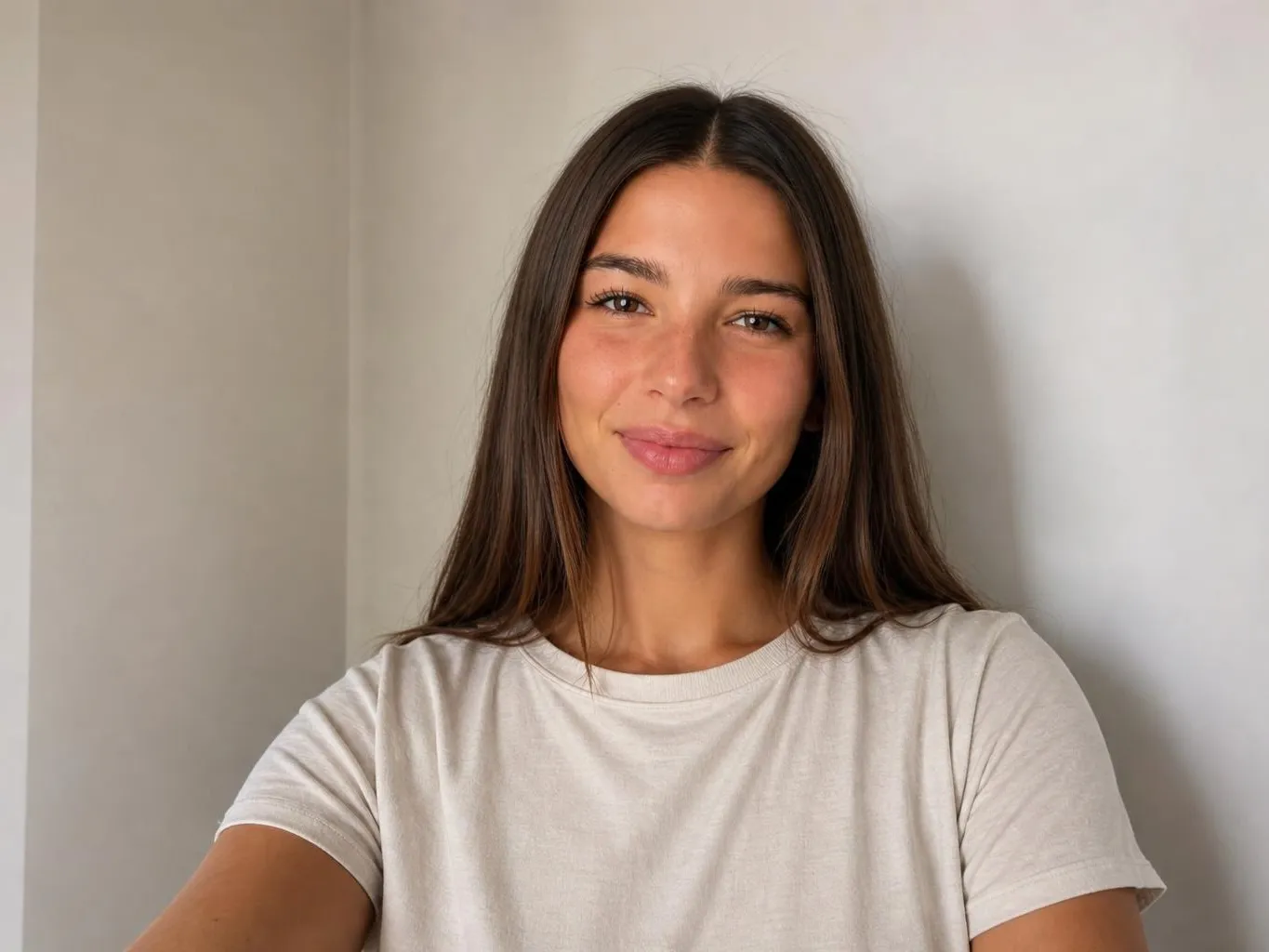
The field that does the heavy lifting is reference_render. That's the studio shot: frontal,
neutral expression, white backdrop, soft key with mild fill. On purpose, it's the most boring
photo a character will ever appear in. Boring is the point. It's a clean read of the face, the
way a passport photo is a clean read of yours.
Why is a plain studio photo the locked reference?
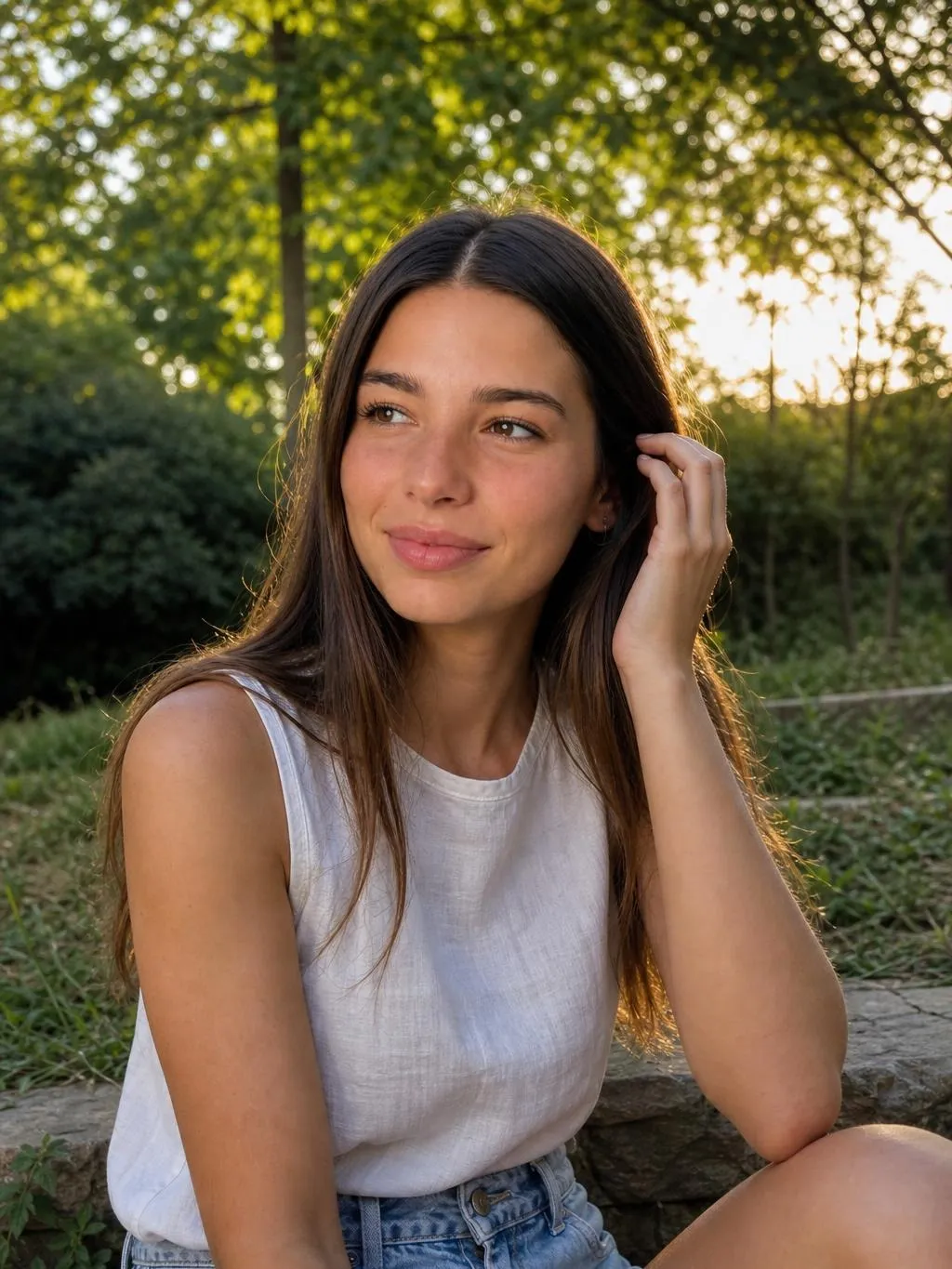
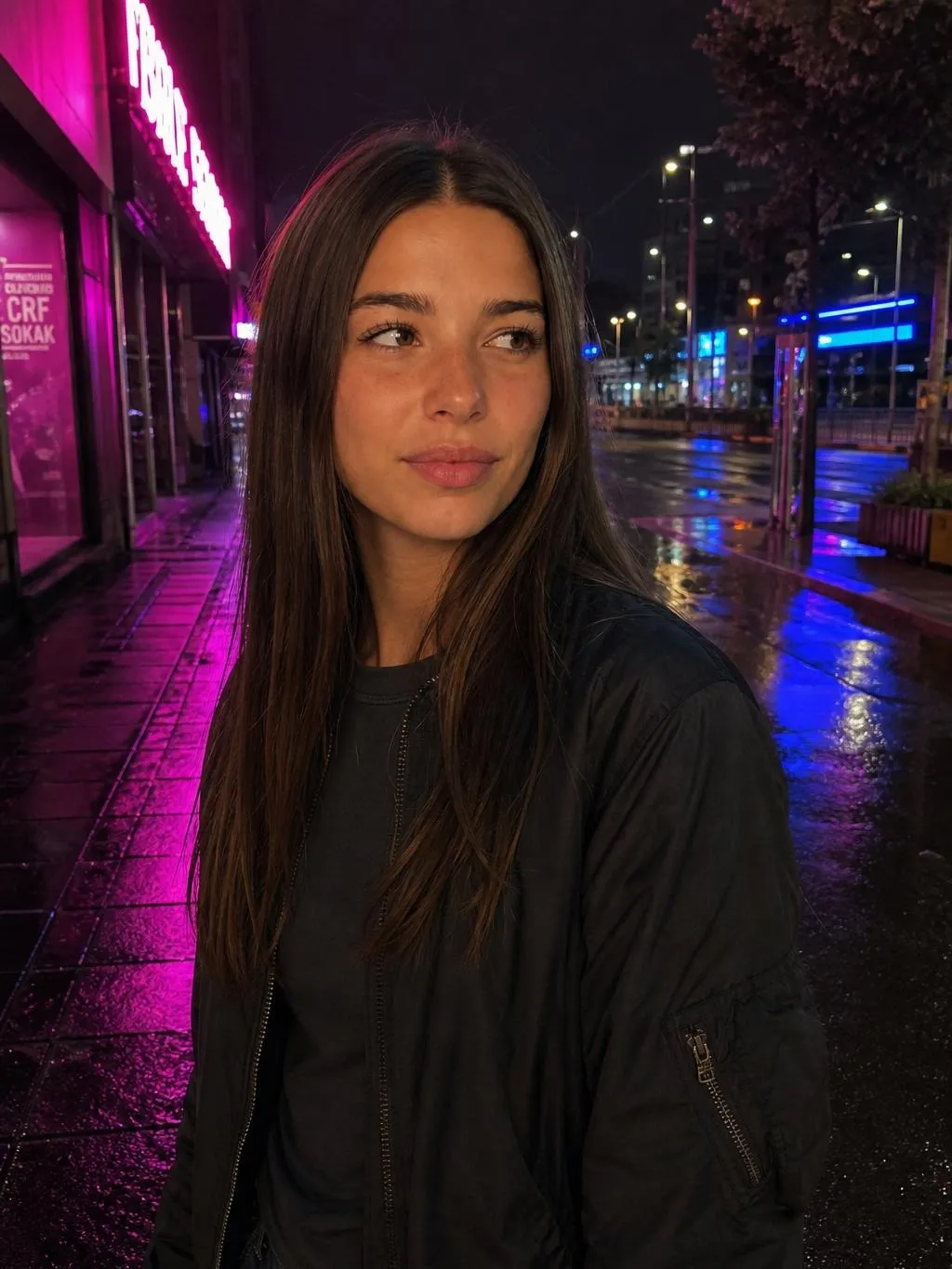
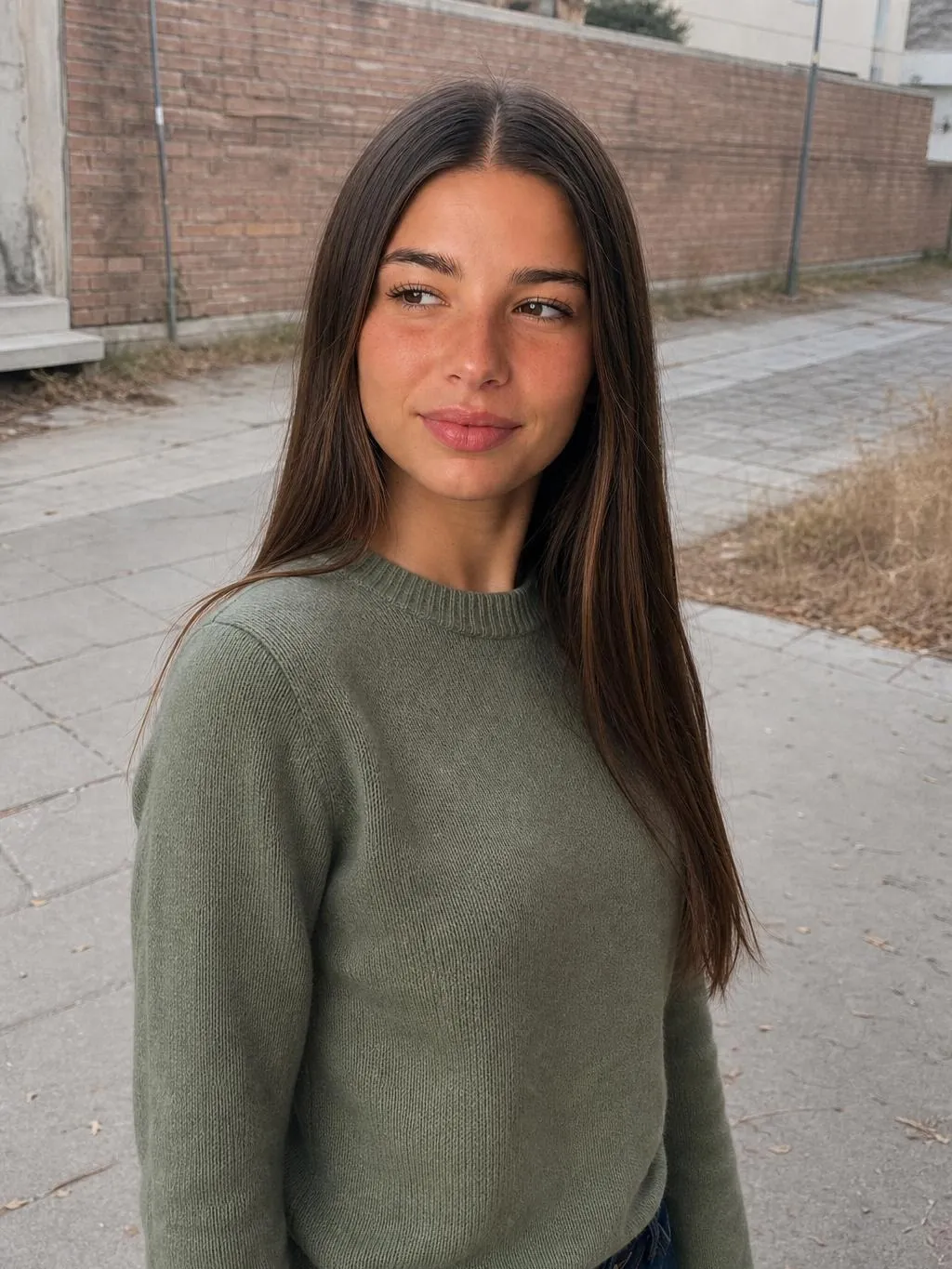
Lock identity from a more "interesting" first render (golden hour, head turned, hair in the eyes) and every future generation inherits more than the face. It inherits the lighting, the angle, the mood. The model treats those as part of the identity it's trying to preserve, and the result is a character that's always slightly squinting because the first photo had a sunbeam in the wrong place.
Studio shot, white backdrop, even light: the face has nowhere to hide. That's the photo handed to every later generation. The new scene's mood, lighting, and framing come from the prompt. The face comes from the reference, and the two never get confused.
The first render is not chosen to be your favourite. Its job is to be the one every other generation can extend without picking up a stray sunbeam or a turned head.

What does Cladegrove send the model on every render?
For every Single shot request, three things are put together and handed to the model:
- The character profile from
character.json, written into the prompt as text. - The reference render, used as a visual anchor, weighted heavily on the face and lightly on the body.
- The scene prompt the user wrote, plus the active wardrobe preset.
The reference render is non-negotiable. There's no way to bypass it from the prompt. "A different face this time" isn't something the API will do, because a different face means a different character, and characters don't blur into each other.
The same architecture is what blocks face-swap as a category. There is no "input photo of a real person" anywhere in the request shape. The model never sees one. It sees a character and a scene.
What is deliberately not locked to the character?
Identity persistence is narrow on purpose. Face, build, and styling are anchored. These are left free:
- Pose. The character can sit, stand, lean, walk, climb, stretch.
- Expression. Smiling, neutral, focused, laughing. The face stays the face whether relaxed or not.
- Wardrobe. Outfits live in their own slot system (13 slots) and travel separately.
- Background, weather, time of day, camera. Those are scene-level and freely picked per render.
Lock any of those into identity and the character becomes a cardboard cut-out: same pose every time, same flat smile. Nobody posts that. The point of holding an identity is that the character can do things and still read as the same person doing them. The full workflow for running the same character across different poses and outfits shows how those free variables are put to use once the face is properly locked.

What happens when character consistency fails?
Sometimes a generation comes back and the face is off. Maybe the prompt fought the reference too hard ("face down, deep shadow"). Maybe the model had a bad day. Cladegrove runs a similarity check on every Single shot output: the new face is compared against the locked reference, and the score is saved with the generation.
When the score drops below a threshold, the generation is flagged in the library and the credit is refunded automatically. Misfires don't need to be hunted down. The system catches them and gives the credit back.
Why does a consistent character matter for a creator?
"The character stays the same" is easy to type into a feature list. It gets hard when a creator has been posting four times a week for six months and needs the character to still read as the same person in month six as in week one. That's the actual job. It is also where the money is: the virtual influencer market was valued at $6.06 billion in 2024 and is projected to reach $45.88 billion by 2030, a 40.8% CAGR (Grand View Research, 2024), and an account only earns at that scale if the face survives the long haul. On the demand side, nearly 90% of consumers want to know whether an image was created with AI (Getty Images, 2024), which means transparency and identity integrity are becoming non-negotiable for audience trust. It matters for a second reason too: a single prompt-generated render is not even copyrightable, so no one owns an individual AI image outright. The character held steady over months is the asset that actually has value. The saved profile, the studio base, the locked reference, and the similarity check all exist to hold that line over months of generations. The full workflow for turning that consistency into a running account is in the guide on how to create an AI influencer with a consistent face. For a wider picture of what a locked character can actually be put to work on, from social series to product modeling to brand campaigns, the use cases for AI-generated characters maps out where consistency pays off in practice. For creators who find that ChatGPT's image generation keeps re-inventing the face between sessions, why ChatGPT loses character consistency and what actually locks it explains the structural reason and what a proper identity layer does instead.
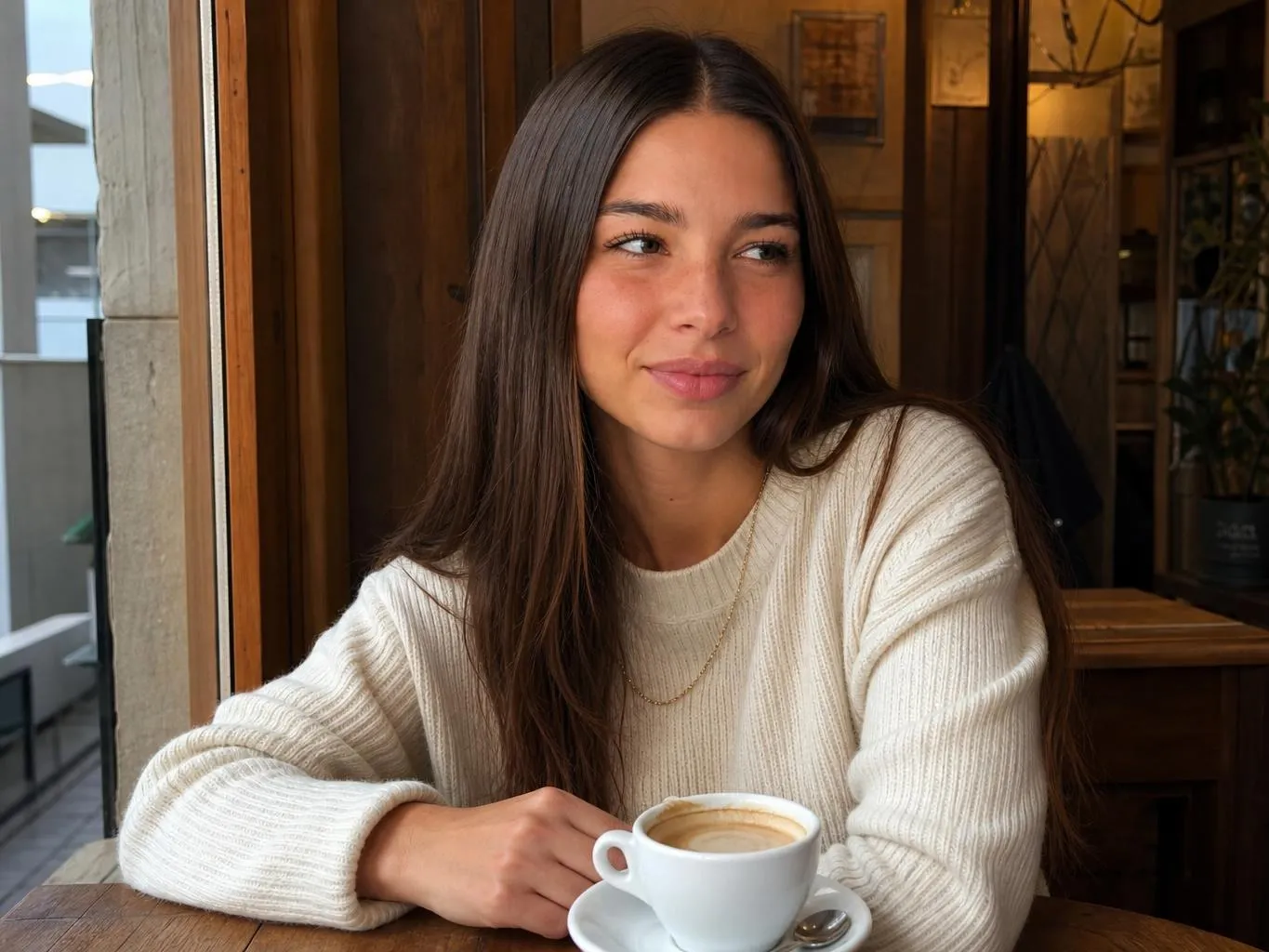
See how the same locked character works for creators building a consistent presence on a feed, or for running several personas at once.
Across a year of building Cladegrove and looking at character renders every day, the failure I kept chasing was the slow drift: a face that stayed close for ten generations, then quietly became someone else by the fiftieth. The boring studio reference is what fixed it. The unglamorous part of the pipeline turned out to be the load-bearing one.
Fabio Ariotti, operator
Common questions
What is character consistency in AI image generation?
Character consistency means a generated person keeps one recognisable face, build, and styling across many images, whatever the scene or pose. Without it, each generation drifts into a slightly different person. It is the line between a one-off render and a character a viewer recognises across a whole feed.
Why do AI characters change face between images?
A plain image model is stateless: it keeps nothing from one request to the next, so it re-invents the face every time unless an identity is supplied. Small prompt or lighting changes then push the features around. A consistent character needs the same locked reference fed into every generation.
Can you keep an AI character consistent without training a LoRA or a custom model?
Yes. Training is one route, but a saved profile plus a fixed reference image, supplied on every render, holds the identity without a per-character training run. Cladegrove uses that reference-based approach, so a new character is usable right away instead of after a training cycle.
How many reference photos does Cladegrove need to lock a character?
One clean studio-style reference is enough to anchor the face for later generations. A frontal, evenly lit, neutral shot reads the features without baking in a mood or an angle. More interesting photos are optional and are never the identity source.
The labeling is not optional either. Meta has applied an automatic "AI info" label to detected AI imagery across Instagram, Facebook, and Threads since May 2024 (Meta, 2024), and the EU AI Act's Article 50 transparency obligations on marking AI-generated content apply from 2 August 2026 (European Commission, 2026). For a deeper read on the legal side, see the note on EU AI Act Article 50, which governs the tag we add to every render, plus a practical guide to writing an AI disclosure statement and what the EU AI Act requires for deepfakes.