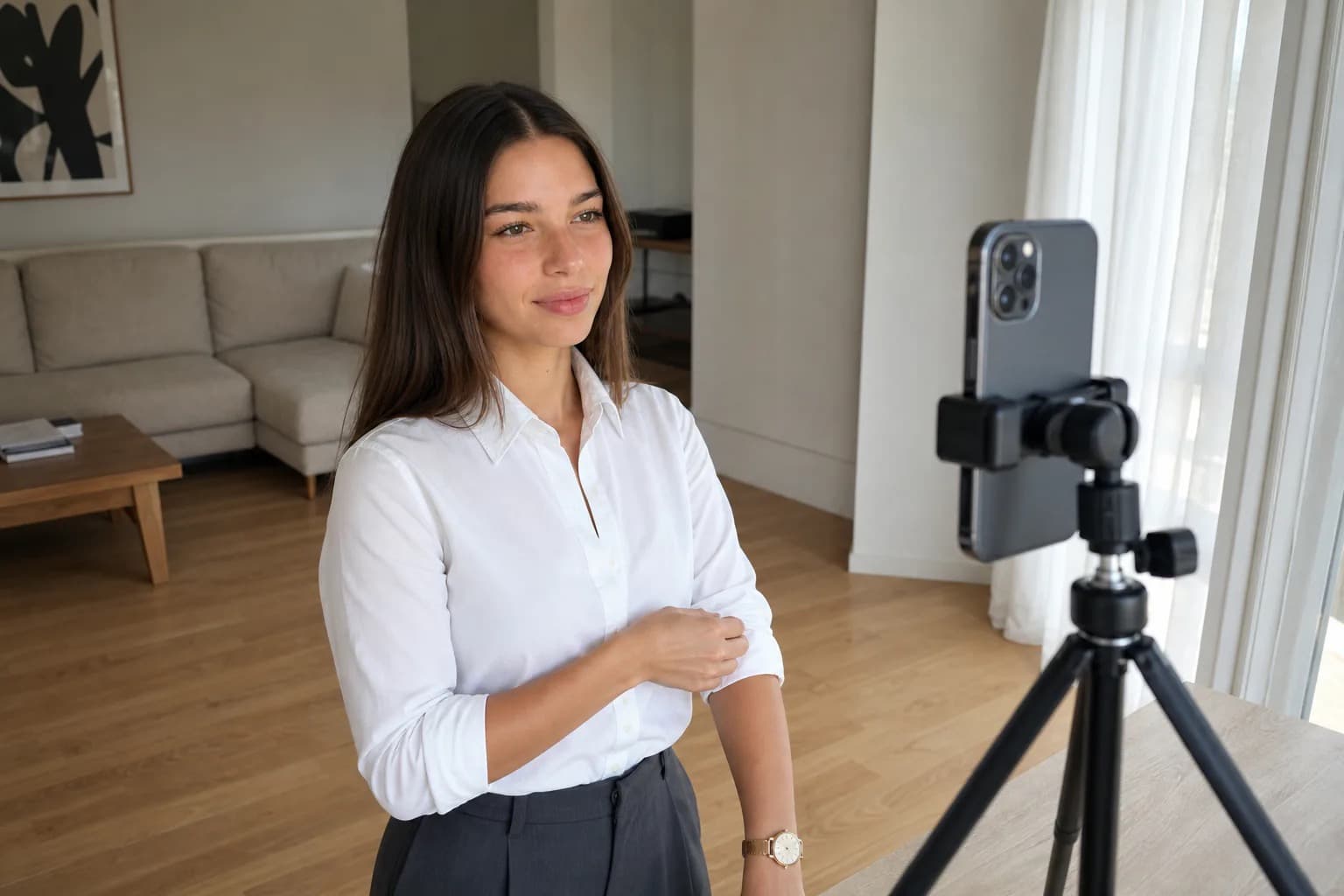
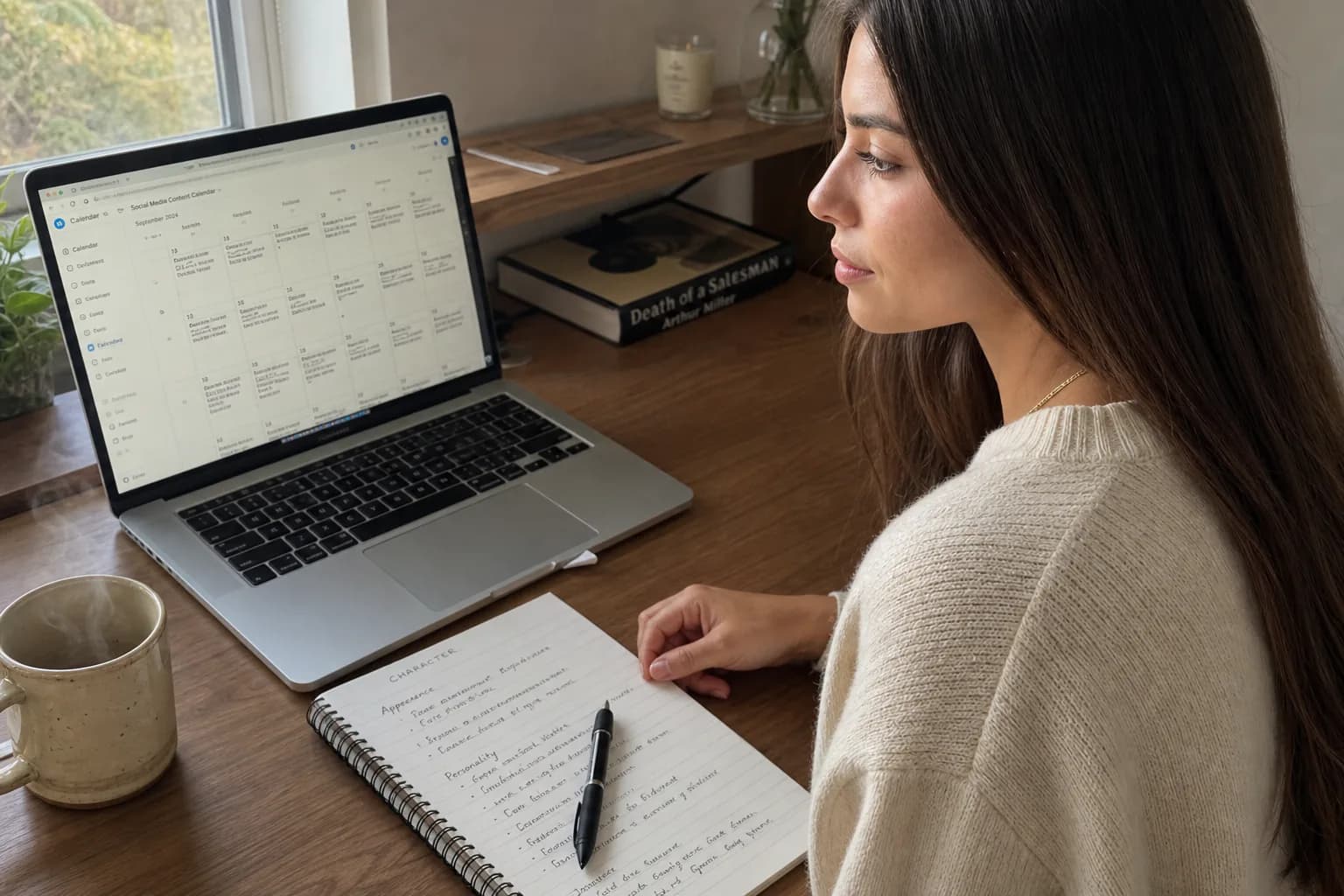
An AI influencer is a computer-generated character, built and run with AI tools, that posts on social media, grows an audience, and promotes products the way a human creator does. It has no physical body and no schedule of its own. The look, the personality, the posting cadence, and the brand messaging all stay under the control of whoever created it. That control is the whole point: the character is an asset you own rather than a person you rent.
What is an AI influencer, exactly?
An AI influencer is a persistent fictional persona with a consistent face, a name, a backstory, and a feed. You generate the images, write the captions in its voice, and post on a real account. To a follower scrolling past, it reads as a person. Behind the account, there is no person, only a character and the human running it.
The defining trait is consistency. A one-off generated portrait is just a picture. An AI influencer is the same recognizable individual appearing across dozens or hundreds of posts: same bone structure, same eyes, same vibe, in a café one day and on a rooftop the next. That recognizability is what lets an audience attach to the character and what lets a brand trust that the next post will look like the last one.
This is also where most attempts fall apart. General image tools have no memory of the face they drew a minute ago, so each new image re-rolls the features and the character slowly turns into a different person. Holding one identity steady across an entire feed is the hard part, and it is what separates a believable AI influencer from a folder of unrelated pretty renders. The mechanism that actually solves it is covered in how Cladegrove locks a character's identity across every render.

How is an AI influencer different from a virtual influencer?
The terms overlap, and plenty of people use them interchangeably, but there is a useful distinction. A virtual influencer is the older, broader category: a digital character that can be built with CGI, 3D modeling, or motion capture, often by a studio. Lil Miquela, the best-known example, predates the current wave of generative tools and was produced with traditional 3D and design work.
An AI influencer is the newer, narrower term for a virtual character produced mainly with generative AI, usually as still images rather than rigged 3D models. The practical difference is cost and speed. A CGI virtual influencer needs a production pipeline and a budget. An AI influencer can be created by one person generating images on a laptop. The category is the same idea reaching a much lower barrier to entry.
The money behind both is real. The virtual influencer market was estimated at $6.06 billion in 2024 and is projected to reach $45.88 billion by 2030 (Grand View Research, 2024), with some analysts forecasting $111.78 billion by 2033 (Straits Research, 2024). Generative tools are the reason the curve is steep: they take the category that used to need a studio and hand it to anyone.

How do AI influencers make money?
The same ways human influencers do. Brand deals and sponsored posts are the largest channel, where a company pays the character to feature a product. Affiliate links earn a cut of sales the account drives. Some run their own product lines, from digital goods to merchandise, and a few license the character itself to brands as a recurring face. For a realistic breakdown of what these streams pay at different audience sizes, how much AI influencers actually earn covers the real numbers.
There is one structural advantage. An AI influencer has no scheduling limits, no travel, and no competing sponsorships unless its owner agrees to them. A brand that builds its own character is not renting attention from a third party; it owns the face and keeps every deal in-house. For a company that already spends on influencer marketing, that shifts a recurring cost into an owned asset.
The constraint is that none of this works without content discipline. The character still needs a steady feed, a consistent voice, and engagement that feels human. The AI handles the pixels. A person still has to run the account like a real creator, because audiences leave the moment a feed feels automated.

What platforms do AI influencers use?
Instagram is the center of gravity, because it rewards a consistent visual identity and a clean grid, which is exactly what a well-run AI character produces. TikTok is growing fast for AI creators, though it leans on short video, which raises the production bar beyond still images. Pinterest, X, and YouTube each host AI personas too, usually as extensions of an Instagram-first presence. For a practical list of formats that work on TikTok without going on camera, 30 TikTok content ideas for faceless creators covers the short-video side.
The platform choice follows the format you can sustain. If your character lives on generated stills, an image-led platform plays to that strength. For stills-based content specifically, generating the same AI character across different poses and outfits is the workflow that keeps a feed looking like one person. If you can produce short video with a consistent on-screen character, TikTok and YouTube open up, but the same consistency problem gets harder, because the face now has to hold steady across motion, not just across separate photos.

Is AI influencer marketing actually effective for brands?
It can be, and the appeal is mostly economic. A brand-owned AI influencer removes the per-post negotiation, the availability gaps, and the risk that a human creator says something off-brand. The character posts on the brand's schedule, in the brand's voice, with full control over what it endorses. For a company running a steady content calendar, that is a lower-friction way to keep a recognizable face in front of an audience.
The honest caveat is that an AI influencer is not a shortcut past the work of building an audience. It removes the casting and the logistics, not the need for content people actually want to follow. Brands that treat the character as a content engine, with real ideas and a real voice, see it work. Brands that expect the novelty alone to carry it watch the account stall.
If you want to build one, the practical bottleneck is keeping the face identical across every post, which is the part general tools get wrong. Cladegrove's consistent character platform holds one character steady across an entire feed, so your AI influencer stays the same recognizable person in every shot. Use the AI influencer generator to build yours. For the full build, the step-by-step guide to creating an AI influencer with a consistent face walks through it, and if you want to test the idea for nothing first, what free AI influencer generators actually deliver is an honest look at the free options. Running the account openly also requires labeling the content correctly; AI disclosure statement templates covers the wording, and the platform rules for disclosing AI content on Instagram and YouTube cover where each one expects the label.

Common questions
What is an AI influencer agency?
An AI influencer agency builds and manages virtual creators on behalf of brands, the way a talent agency manages human influencers. It handles the character design, the content schedule, the brand deals, and often the community replies. Some brands hire one; others build the character in-house once they realize the work is mostly content production, not technology.
Can an AI influencer go viral without a human behind it?
No. Every AI influencer has at least one person deciding what it posts, who it talks to, and which deals it takes. The character is generated, but the strategy, the captions, and the timing are human calls. The automation is in the visuals, not the judgment.
Are AI influencers legal and do they need disclosure?
They are legal in most markets, but disclosure rules are tightening. The EU AI Act requires that AI-generated or manipulated content be labeled, and platforms like Instagram and TikTok ask creators to flag synthetic media. The safe practice is to disclose that the character is AI-generated rather than imply it is a real person.
What is the best AI influencer generator to start with?
The best one for you is whichever keeps the same face across every post without you fighting it. Most general image tools drift, so the character looks slightly different shot to shot, which breaks the illusion of a single person. Pick for consistency first, then for image quality, because an audience forgives an average photo faster than it forgives a face that keeps changing.