Lifestyle product photography shows a product in a real setting or in use, in contrast with the plain white-background shot every listing starts with. AI now builds those scenes from a single photo of the product, in minutes rather than the days a location shoot needs, and at a cost measured in cents rather than the $75 to $300 per styled image that Lars Miller Media's 2026 pricing guide quotes for a photographer. The part most AI tools still get wrong is keeping the same model across the whole set, which is what separates a coherent campaign from ten unrelated renders.
What is lifestyle product photography?
Lifestyle product photography puts the product where it belongs in a customer's life: the candle lit on a coffee table with a book beside it, the jacket worn on a street corner in autumn light, the bottle held over a kitchen counter. The product is still the subject. The setting is there to answer a question the white-background shot cannot, which is what owning this thing actually looks like.
Buyers use the two kinds of image for different jobs. The clean studio shot is for inspection: shape, color, what is in the box. The lifestyle shot is for projection: scale, context, whether it fits the life the buyer imagines for themselves. Listings that only carry the first kind ask the buyer to do that imaginative work alone, and most of them will not bother.
The reason brands under-invest in it is straightforward. Lifestyle images are the expensive ones. They need a location or a set, styling, props, often a model, and a photographer who can light all of it. That same 2026 pricing guide puts a full-day lifestyle shoot at $1,500 to $4,000 for the photographer's time and 30 to 60 deliverables, before studio rental, model fees, and retouching land on top. So brands shoot lifestyle once a season if at all, and the rest of the catalog stays on white.
How does AI generate lifestyle product photos?
The workflow starts with a real photo of the real product, usually a clean shot on a neutral background of the kind you already have. That image is the anchor. The model then generates a new scene around it: a surface, a room, a light source, props, a time of day, and optionally a person interacting with it. The product stays recognizable while everything around it is synthesized.
That order matters, and it is where most bad AI product imagery comes from. If you ask a model to invent the product as well as the scene, it will produce something that looks like your product without being it: the label drifts, the proportions shift, the stitching goes somewhere else. Anchor to a real photo, generate the world around it, and the output stays honest to what ships.

From there it is iteration rather than production. A scene brief that would have been a call sheet becomes a description, and instead of one location per shoot day you can put the same product in a kitchen, on a beach towel, in a car, and in a gift box, then keep the four that work. The broader mechanics of this, including how it applies to the whole catalog rather than one hero product, are covered in the practical guide to AI product photography for ecommerce.
Lifestyle vs studio product photography: which does your listing actually need?
Both, and in a specific order. The studio shot is non-negotiable and non-substitutable: it is the main image on a marketplace listing, it is what a buyer zooms into, and on Amazon it is a policy requirement that the primary image be the product on pure white, a rule covered in full in the Amazon product photography guide. Nothing about AI changes that. Start there and get it right.
The lifestyle images are what you add once the clean shot exists, and they are where the gallery earns its conversion. They carry scale, which a white-background photo destroys, and they carry context, which is what turns a spec into a want. A shopper deciding between two near-identical products will pick the one they can already picture on their desk.
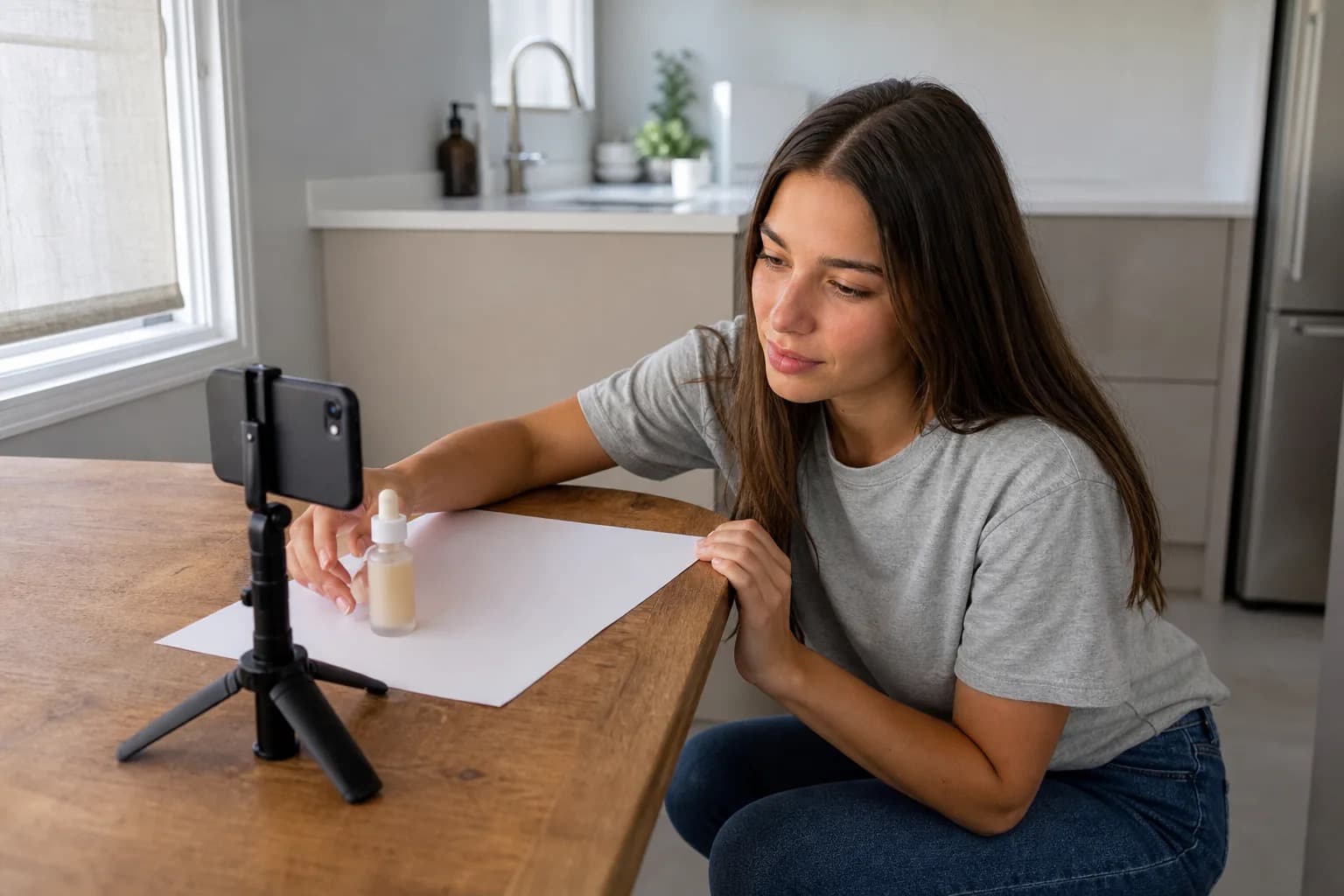
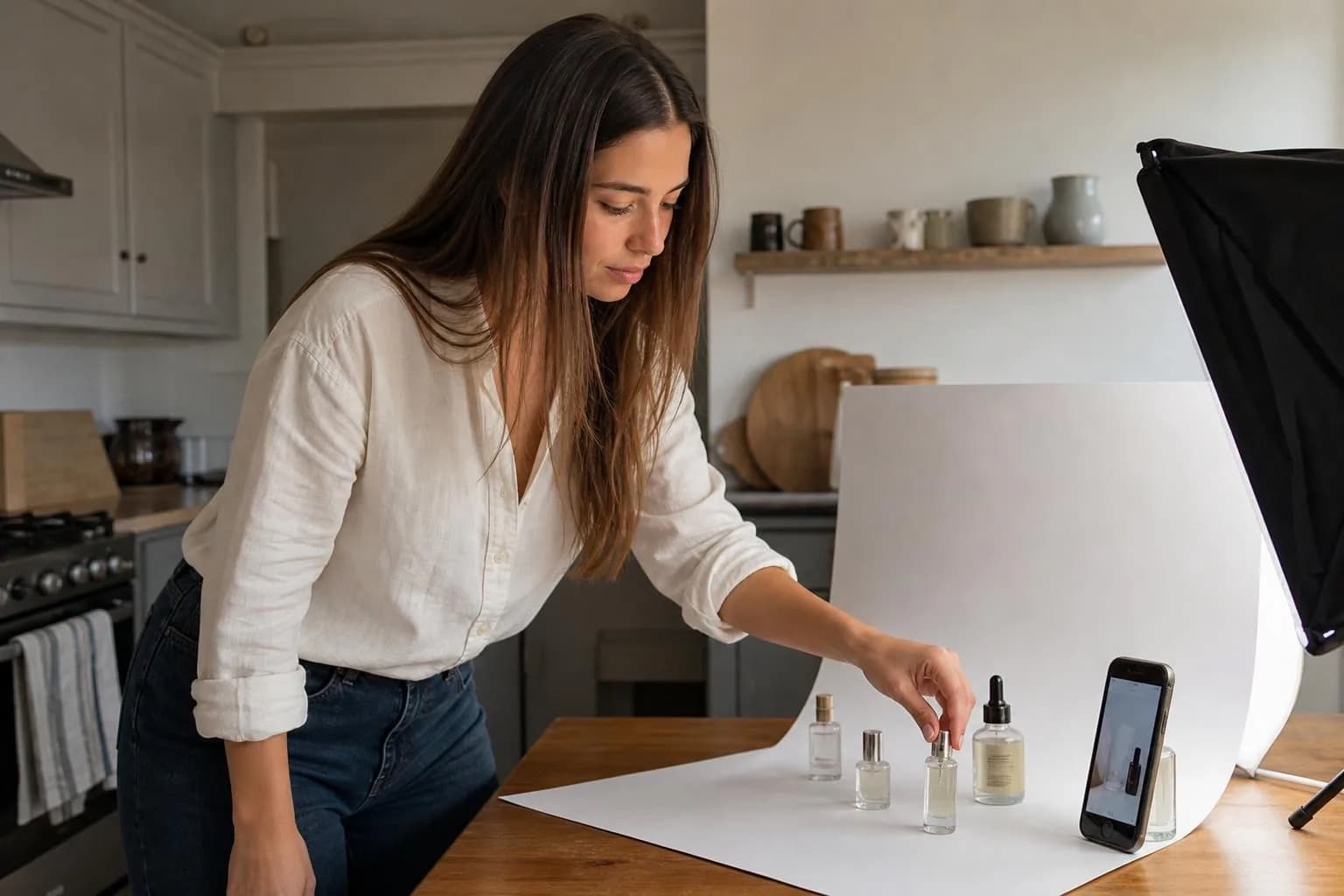
The practical read for a small brand: shoot the product properly once, then generate the lifestyle set. That splits the budget where the returns are. The clean shot is cheap to get right with a phone, a window, and a sheet of white paper. The lifestyle set is the part that used to cost thousands, and it is the part AI actually collapses.

Can AI put a real person using or wearing the product in the scene?
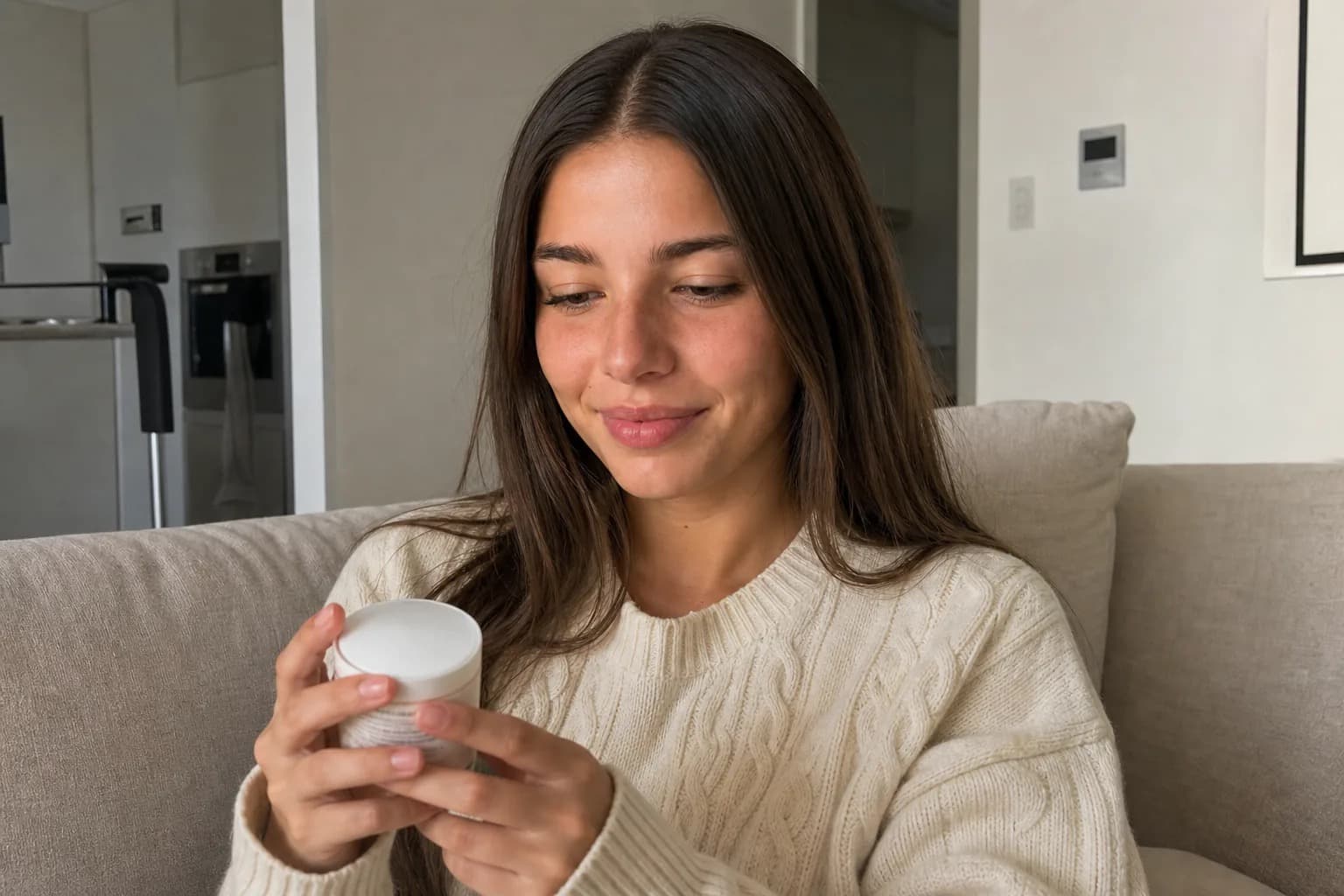
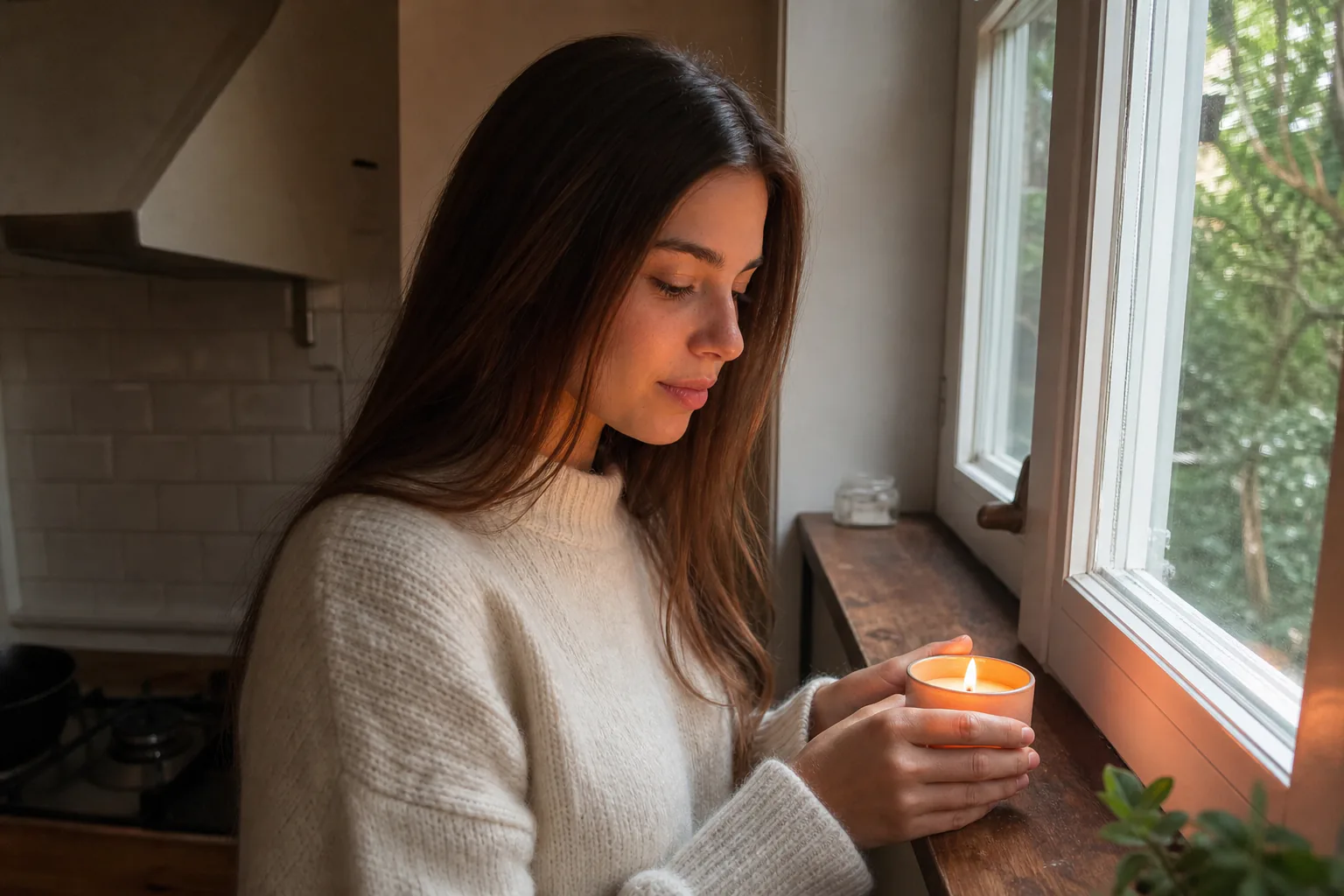
Yes, and for a lot of categories this is the only lifestyle shot that matters. Apparel needs a body in it or the buyer cannot read the fit. Beauty needs skin. Accessories need a hand for scale. A candle on a table is a lifestyle shot, but a person lighting it is a story, and the second one sells harder.
Putting a person in the frame is also where the failure mode shows up. Generate five scenes and you get five different people, because the model has no memory of the last one. Individually each image looks fine. Lined up in a gallery or an ad set they read as stock photography, which is the exact impression a lifestyle shoot exists to avoid. The buyer does not consciously register the face changing. They register that the images do not feel like a brand.
For apparel specifically, where this bites hardest and where the same face has to carry an entire catalog, the process is broken down in running an AI photoshoot for a clothing brand.

How do you keep the same model across every lifestyle photo in a set?
You establish the person as a fixed identity before you shoot the scenes, instead of describing them again in every prompt. A written description like "woman in her twenties, dark hair" is not an identity. It is a category, and the model will hand you a different member of that category every time you ask.
A repeatable set comes together like this:
- Lock the product. One clean, well-lit reference photo of the real item. This is what every scene will be built around.
- Lock the person. Establish the model as a persistent character with a fixed face, not a prompt description regenerated per image. This is the step almost every lifestyle-photo tool skips.
- Write the scene list, not the shots. Six to ten settings across the contexts your buyer actually lives in. Vary the room, the light, and the moment, and keep the product and the person constant.
- Vary one axis at a time. Change the setting while holding the person, or the outfit while holding the setting. Changing everything at once is how a set stops looking like one shoot.
- Review the set as a gallery, not as images. Open all of them together, the way a shopper sees them. Inconsistencies that are invisible one at a time are obvious in a row.
The whole exercise is an attempt to reproduce, without a studio, the thing a real shoot gets for free: one day, one location, one person, one look. A photographer never has to worry about the model's face changing between frames. With a generative model that is the default behavior, and it has to be engineered out.

What does lifestyle product photography cost with AI vs a traditional shoot?
Take the numbers from earlier and compare like for like. A full-day lifestyle shoot at $1,500 to $4,000 in photographer time yields 30 to 60 finished images, which works out somewhere between $25 and $130 an image before you add the studio, the model, the stylist, and the retouching. A single styled lifestyle image bought on its own runs $75 to $300, per the same 2026 guide. Those are real prices for real work, and a photographer earns them.

The AI side does not compete on being somewhat cheaper. Once you are set up, the marginal cost of the next image is a rounding error, so the constraint stops being budget and starts being judgment about which scenes are worth having. A brand that could afford one lifestyle shoot a year can afford one per product, per season, per campaign.
What the money does not buy you is the taste. AI generates the scene; it does not decide that this product belongs on a windowsill at 7am rather than in a studio at noon. The scene list is the creative work, and it is still yours to do. A brand that ports over a photographer's eye and lets the tool handle execution gets a catalog that looks art-directed. A brand that generates whatever the tool suggests gets a catalog that looks generated.
Cladegrove exists for the hard half of this: holding the same character, styling, and visual language across every shot, so a lifestyle set looks like one shoot with one model instead of a folder of unrelated renders. You design the model once, wire your catalogue into the wardrobe, and the same face carries every scene on the list. See how it works.
Common questions
Do I need to photograph the real product first, or can AI generate it from scratch?
Photograph the real product first. AI can invent a plausible-looking object, but it will not reproduce your exact packaging, label, stitching, or colorway, and a customer who receives something different from the photo is a return and a chargeback. Use a clean shot of the actual item as the reference and let the model build the scene around it.
Is AI lifestyle photography good enough for Amazon or Instagram ads?
For secondary and lifestyle slots, yes, and sellers are already doing it. Amazon expects the main listing image to be the product on a pure white background, so that one stays a straight product shot. The lifestyle images further down the gallery, and the creative in a paid social ad, are where generated scenes hold up.
Can AI lifestyle photos include a model actually wearing or holding the product?
Yes, and that is the format that converts hardest, because it shows scale and use in one frame. The requirement is that the model looks like the same person across the set. A different face in every shot reads as stock imagery and undoes the point of shooting lifestyle in the first place.
What is the difference between lifestyle and product photography?
Product photography isolates the item, usually on white, so a buyer can inspect it. Lifestyle photography places the item in a setting or in use, so a buyer can picture owning it. A listing needs both: the clean shot answers what it is, the lifestyle shot answers what it is like to have it.