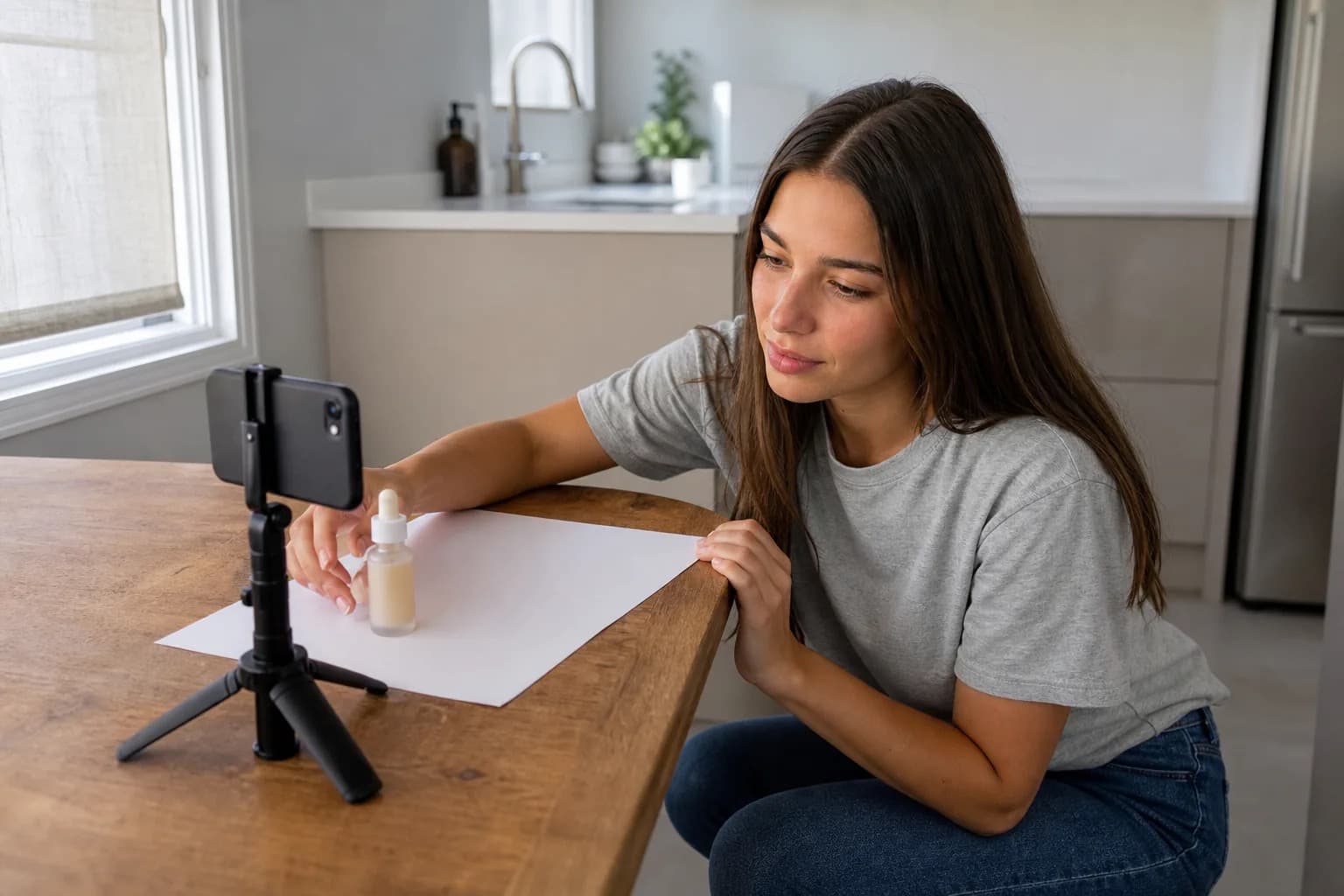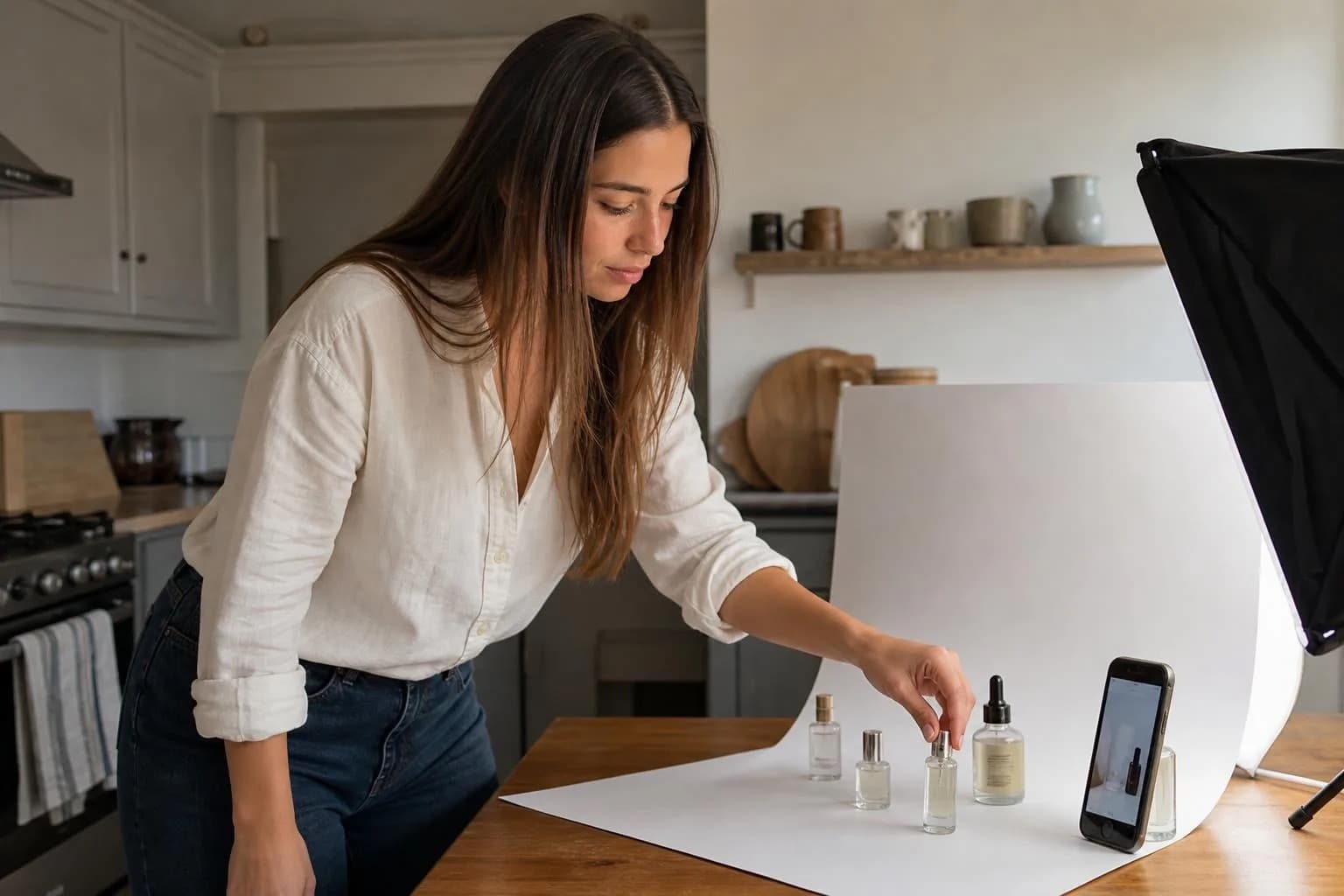
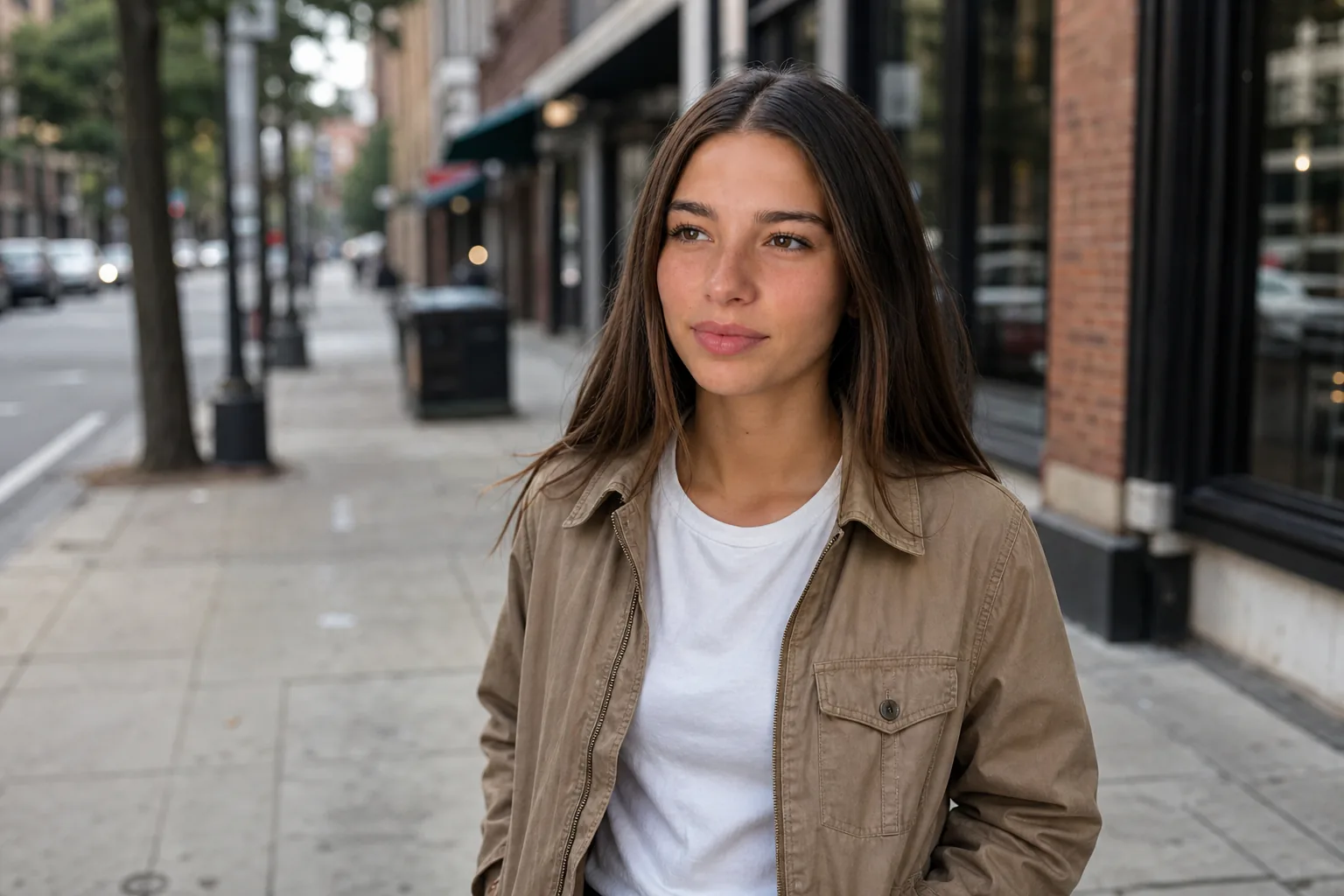
Commercial photography is the umbrella term for any image made to sell or market a product or a brand: advertising, lifestyle scenes, brand campaigns, and product shots all sit under it. Product photography is one type of commercial photography, the photos of the product itself, usually on a clean or styled surface for a listing or a catalog. So the two words are not competing services at the same level. One contains the other. The reason the distinction matters is money: a quote for "product photography" often leaves out the lifestyle and advertising shots a brand actually needs for social and paid campaigns, and you find that out after the invoice.

What counts as commercial photography vs product photography?
Product photography answers one question: what does the product look like? The subject is the item, shot to show its shape, color, material, and detail with as little distraction as possible. White-background listing shots, catalog grids, packaging shots, and clean studio angles are all product photography. The person hiring it wants an accurate, appealing record of the thing being sold.
Commercial photography answers a wider question: how do we make people want this? That includes the plain product shot, but it also includes the model wearing the jacket on a street, the skincare bottle on a bathroom shelf in morning light, the campaign image that carries a brand's whole mood. The subject is often a scene or a person, and the product is inside it rather than isolated on a sweep.
The cleanest way to hold it: product photography is about the object, commercial photography is about the sell. A brand that only ever needs listing images needs product photography. A brand that needs to run ads, fill a social feed, and build a recognizable look needs commercial photography, and product shots are one deliverable within that.

Why does commercial product photography cost more than plain product photography?
The gap is not the camera. It is everything the frame contains beyond the product.
A clean product shot is close to a repeatable process: a controlled light setup, a surface, and the item. Once the setup is dialed in, each additional shot is fast, which is why product shots are often priced per image and get cheaper at volume.
A commercial or lifestyle shot adds variables that each carry a cost. A location has to be scouted or rented. Props and styling have to be sourced. A model has to be cast, booked, and paid, and often a stylist and an assistant come with them. Every one of those turns a fast per-image job into a production with a day rate, and the day rate is where the number jumps from tens of dollars to hundreds or thousands. You are not paying more for a better photo of the product. You are paying for the scene the product now lives in.
That is also why a single quote can mislead. If a brand asks for "product photography" and receives a low per-image number, then later asks for the lifestyle and ad shots, those come as a separate, much larger line item, because they were never inside the original scope.

Do you need commercial photography, product photography, or both?
Start from where the images will be used, not from the service name.
If you sell on marketplaces and your images live on listing pages, product photography is most of what you need. Marketplace buyers want to see the item clearly from several angles on a clean background, and a strong set of product shots does that job. Amazon in particular enforces its own strict main-image spec on top of this, covered in full in the Amazon product photography requirements guide.
If you run paid ads, build a brand-led social feed, or sell in a category where the product is judged in context, such as apparel, home, food, or beauty, you need the commercial side. A jacket on a sweep tells a shopper the color. A jacket worn on a person tells them the fit, the drape, and whether it belongs to a life they want. That second image is what carries an ad, and it is the one a plain product-photography package does not include.
Most brands need both, in different proportions. The mistake is budgeting for one and assuming it covers the other. A useful check: list every place an image will appear over the next quarter, mark which ones need a scene or a person, and you will see your real ratio of product to commercial work before anyone sends a quote.

How does AI change what's affordable in commercial photography?
The old cost structure treated the two as separate projects because they used separate resources: a lightbox and a table for product shots, a location, a model, and a crew for commercial shots. That second resource set is what made the commercial side expensive and slow.
AI compresses the gap. A single AI model, held consistent across a whole set, can appear in scene after scene without a casting call, a booking, or a shoot day. The same face can wear the product on a street, hold it in a kitchen, and sit with it in a cafe, and the marginal cost of the next scene is close to the cost of the next generation rather than the cost of another production day. The clean product shot and the full lifestyle scene stop being two budgets and become two outputs of one workflow.

The honest limits are worth stating. The hard part of the AI route is holding one identity fixed across every frame, because image models drift by default and a model whose face changes between shots reads as a different person each time. That consistency is the whole game, and it is what separates a usable set from a pile of near-misses. For the narrower listing side, our practical guide to AI product photography for ecommerce walks through the clean-shot workflow, and for the scene side, lifestyle product photography with AI covers building the full context shot. If you are weighing this against hiring creators to make the content, what AI UGC is and how brands use it frames the ad-creative half.
For brands that need both the tight product shot and the full commercial scene without running two separate shoots, Cladegrove produces on-model and lifestyle content with a consistent AI face. See how it fits your catalog.
Common questions
Is commercial photography the same as advertising photography?
Advertising photography is one part of commercial photography, not the whole of it. Commercial covers any image made to sell or market something, including catalog shots, lifestyle scenes, and brand campaigns. Advertising photography is the narrower slice built specifically for paid placements, so every advertising image is commercial, but plenty of commercial work never runs as an ad.
Can one photographer or one shoot cover both product and lifestyle shots?
Yes, though the two usually need different setups on the day. A clean product shot wants controlled light and a plain or styled surface, while a lifestyle scene wants a location, props, and often a person using the product. A photographer who does both will typically split the day into two blocks rather than getting both looks from a single lighting arrangement.
Do I need a model for commercial product photography?
Only for the shots where a person is part of the message. A listing image of the product on its own needs no model. A lifestyle or advertising image showing the product worn, held, or used does, which is one of the reasons that side of the work costs more. This is also where AI changes the math, since a consistent AI model can appear across a whole set without a casting or booking.
What is a reasonable commercial product photography price range in 2026?
It splits by scope rather than landing on one number. Plain product shots are commonly quoted per image, often in the low tens of dollars each at volume. Commercial and lifestyle work is usually quoted as a half-day or full-day rate that runs into the hundreds or low thousands once a location, styling, and a model are involved. Treat any single quote as covering one of those scopes, not both.