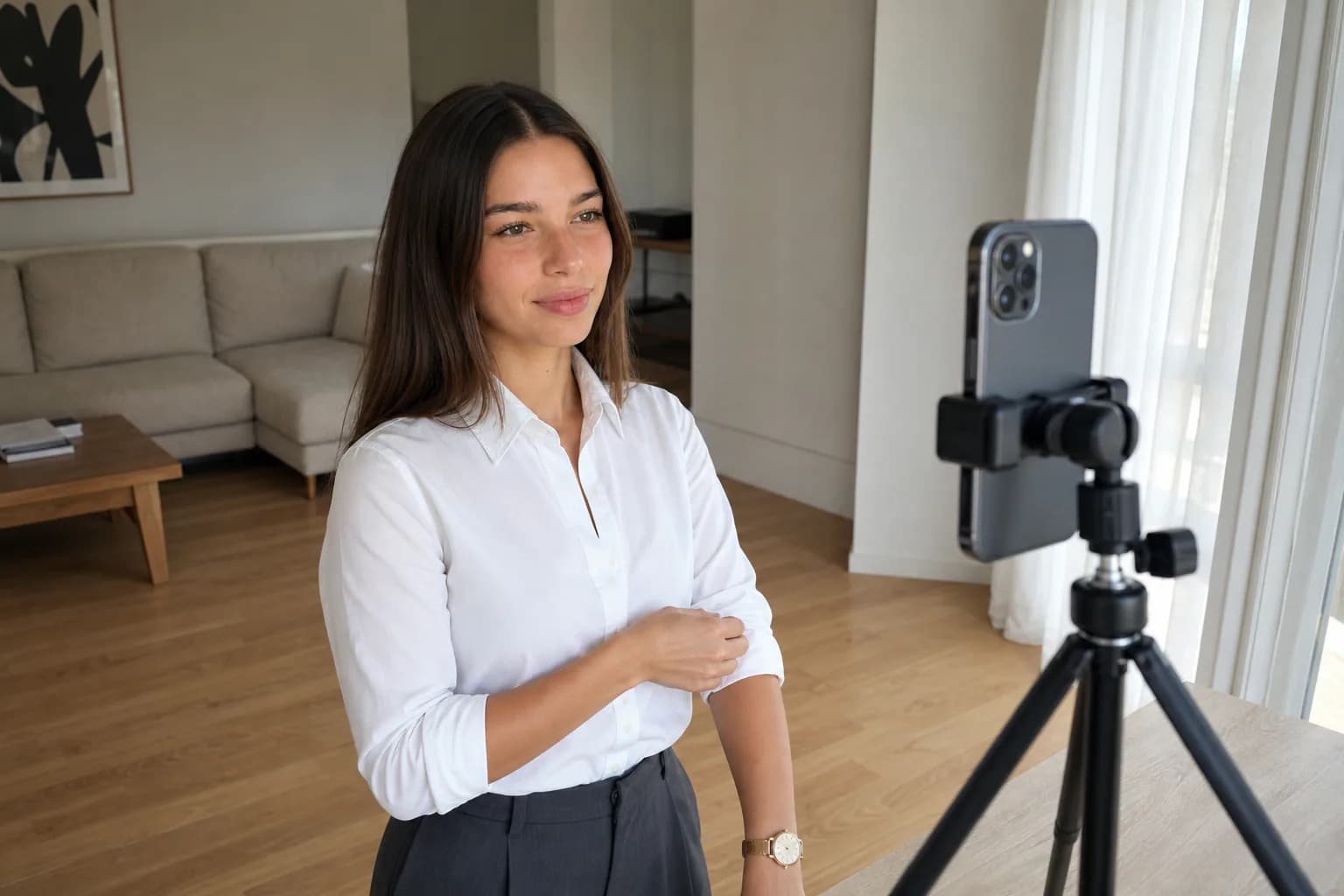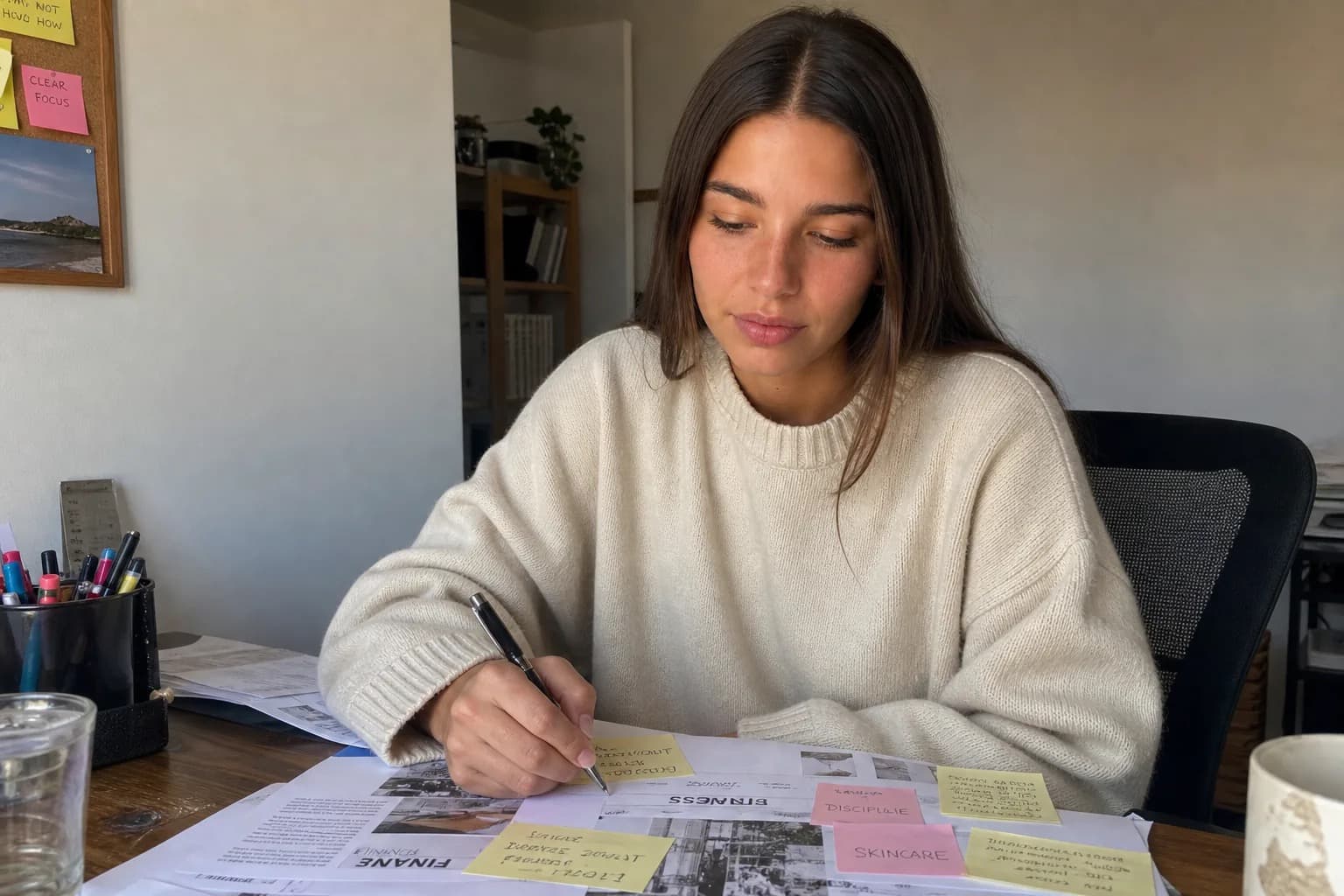
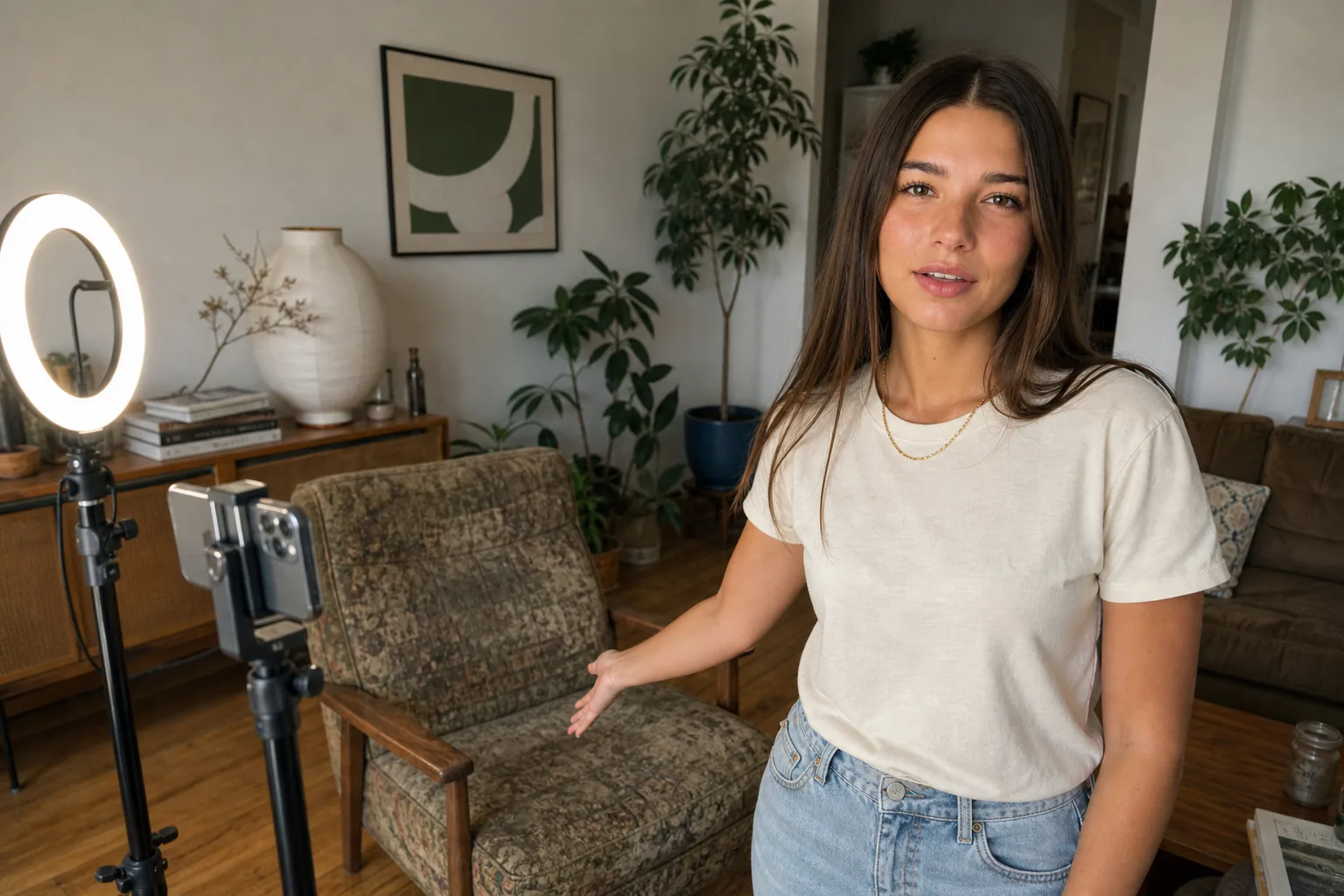
An AI influencer account grows on Instagram the same way any niche account grows, and the parts that decide it happen before the follower count moves. The niche has to be specific enough to describe in one sentence, and the character has to read as the same recognizable person in every post, because both of those are what a stranger evaluates in the few seconds they spend on the profile grid. Plan on at least 90 days of posting before the numbers say anything useful about whether the account works. Past those two decisions, how to grow an AI influencer on Instagram comes down to cadence by format, face drift and the damage it does before an audience even forms, disclosure, and the point where growth turns into revenue.
Why do niche-first AI influencer accounts grow on Instagram while face-first ones plateau?
A face-first account leads with the character and treats the content as filler: a good-looking person in a series of unconnected settings. It collects a first wave of curiosity views and then flattens, because nothing about it gives a viewer a reason to expect a second post worth seeing. Follows are a prediction about future content, and a face on its own predicts nothing.
A niche-first account inverts that. The character is the presenter, and the account is about something: restoring mid-century furniture, marathon training in a specific city, thrift flips, budget interior design. The topic gives Instagram's recommendation surface a category to test the content against, and it gives the viewer a concrete reason to follow that survives past the first scroll.
The practical test is whether you can finish the sentence "this account is about ___" without mentioning the character. If the only answer is "her", the account is face-first and will plateau in the low hundreds regardless of image quality. Picking that topic is a separate piece of work, covered in the niche ideas that actually hold up for an AI influencer account, and it is worth settling before the first post rather than after the first stall. The name and the bio that go with that niche are covered in AI influencer name ideas, grouped by niche.

What does a realistic Instagram posting schedule look like for growth?
Instagram's average engagement rate sat at 0.48% of followers in 2026, down 24% year on year, and the drop was not evenly distributed across formats (Socialinsider, 2026). Carousels held up best at 0.55%, Reels landed at 0.52%, and static images fell to 0.37% after a 17% annual decline. The formats now do different jobs, so the schedule has to cover more than one of them.
The benchmark cadence for accounts in growth mode, from the same 2026 dataset:
| Format | Posts per month | Role in growth | | --- | --- | --- | | Reels | 8 | Reach: this is what puts the account in front of non-followers | | Carousels | 5 | Depth: highest engagement, gives the follow decision something to weigh | | Static images | 7 | Grid: fills the profile so it reads as a real account, low reach on its own |
That is 20 posts a month, roughly five a week. It is a production load, and it is the reason most AI influencer accounts die in week three rather than month three. Building a month of content in two batches beats trying to produce daily, and it also keeps the character's look stable, since a batch generated in one sitting drifts less than 20 one-off generations spread across a month.

Treat the first 90 days as format testing rather than growth. Run the same topic through all three formats, keep the ones where saves and shares hold up, and drop the ones that only collect passive views. The setup work before that point (profile, first content set, character build) is covered in the full walkthrough on creating an AI influencer.
Why does face consistency matter for growth, not just aesthetics?
Because the follow decision happens on the profile grid, where nine posts are visible at once. A viewer who arrives from a Reel sees those nine thumbnails side by side, and a face that shifts between them reads as a folder of AI images rather than a person with an account. The tab closes there, and no amount of posting volume fixes a profile that fails this check.
The drift itself is structural. Image models are stateless: every generation rebuilds the face from the description, with no memory of the previous render, so small differences accumulate across a set of images even when each individual one looks fine. A description like "brown eyes, oval face, dark hair" fits millions of possible faces, and the model picks a different valid match each time. The mechanism, and the workflow that fights it, is covered in how identity lock keeps a character the same person across every image.

For a growing account, the cost of drift is not cosmetic. It removes the one asset the account is building, which is a recognizable recurring character that people remember between posts. Holding the identity across a feed is the specific job Cladegrove's AI influencer generator exists for: the character profile and reference are stored outside the model and supplied on every render, so post 60 shows the same person as post 1.
Should you disclose the account is AI while trying to grow it?
Disclose it. Meta has been applying "AI info" labels to AI-generated images since May 2024, largely by reading C2PA metadata that most generation tools attach automatically, and Instagram has tested an optional "AI creator" label on top of that (Meta Transparency Center; Engadget, 2026). An account that presents as human and then gets labeled by the platform loses the audience's trust at the exact moment it was building it.
Disclosure also does useful filtering. It costs you the followers who would have left the moment they worked it out, and keeps the ones who came for the content, which is the audience a brand actually wants to pay for later. The specific rules per platform, including where disclosure is mandatory rather than optional, are in the platform-by-platform guide to disclosing AI content.

How many followers can an AI influencer realistically expect, and by when?
There is no honest number here, and anyone quoting one is selling something. What the data supports is a shape rather than a target: most accounts sit in the low hundreds through the first two or three months, and the ones that break out usually do it on one or two Reels that reach far past the follower base, not on steady linear accumulation.
That makes follower count a poor early metric. Over the first 90 days, the numbers that actually predict growth are the follow rate on profile visits (are people who land on the grid converting), saves and shares per post (is the content worth keeping), and retention on Reels past three seconds (is the hook working). An account with 300 followers whose profile visits reliably convert is in better shape than one with 3,000 that nobody comes back to.
If none of those move at all after 90 days of consistent posting, the problem is usually the niche rather than the execution, and the fix is repositioning the account instead of posting more.

When does growth turn into monetization?
The signal is not a follower threshold, it is inbound: people asking where something came from, saving posts about specific products, and brands in the niche appearing in the DMs. That tends to happen well below the follower counts creators expect, because a small audience that trusts a recommendation is worth more to an advertiser than a large one that scrolls past.
What the money looks like once it arrives, and which revenue streams pay what, is covered in detail in what AI influencers actually make.

Most of what stops these accounts is production rather than strategy, and production stalls when the character will not hold still between posts. Cladegrove keeps one character consistent across an entire feed, so a five-post week becomes a matter of writing scenes instead of re-rolling renders until the face matches.
Common questions
Do AI influencer accounts get shadowbanned more than human accounts?
There is no evidence that Instagram suppresses an account for being AI-generated on its own. What does get suppressed is the behavior that often comes with these accounts: reposting the same asset, engagement pods, follow-unfollow loops, and undisclosed AI in paid promotions. Meta labels AI content rather than hiding it, and applies reduced distribution mainly to realistic media presented as something that actually happened.
What's a good engagement rate for a growing AI influencer account?
Anything above the platform average of 0.48% is a reasonable position, and small accounts usually sit well above it because their audience is self-selected (Socialinsider, 2026). Early on, the more useful signals are saves and shares per post and the follow rate on profile visits, since a few hundred followers make percentage engagement noisy.
Can an AI influencer grow without posting every single day?
Yes. The benchmark cadence for a growing account is closer to 20 posts a month across formats, which works out to five a week rather than daily (Socialinsider, 2026). Consistency of format and character matters more than raw frequency, and a gap of two or three days does no measurable damage as long as the schedule holds over months.
Does an AI influencer account need to be run from a business or creator profile?
A creator or business profile is worth switching to early, because a personal profile gives you no access to reach, follow-source, or retention data. Creator accounts also come with the scheduling and inbox tools that make a five-post week manageable. The profile type has no direct effect on distribution.